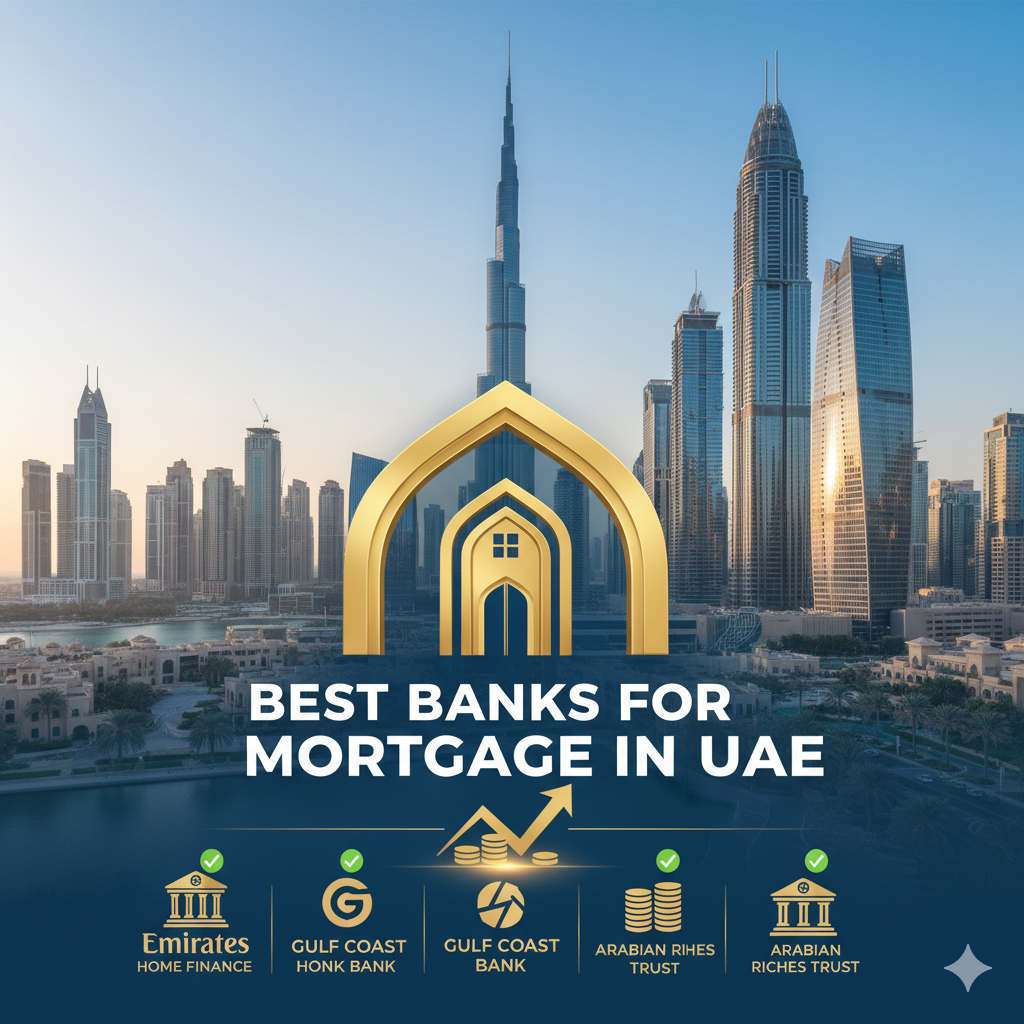
When it comes to buying property in the United Arab Emirates (UAE), choosing the right mortgage provider is one of the most crucial financial decisions. With a competitive banking sector and attractive real estate market, the UAE offers plenty of options for residents and non-residents alike. In this detailed guide, we will cover the best banks for mortgage in UAE, compare their features, and explain the benefits they bring to home buyers.
Why Choosing the Right Bank Matters for Your Mortgage
A mortgage is often the largest financial commitment a person makes. The interest rate, repayment flexibility, hidden charges, and eligibility criteria vary widely from one bank to another. By choosing the right bank, borrowers can save thousands of dirhams over the loan tenure and enjoy peace of mind with transparent terms.
Top Banks Offering Mortgages in UAE
Here are the leading banks that provide competitive home loan and mortgage solutions:
1. Emirates NBD Mortgage
Emirates NBD, one of the largest banks in the region, offers a variety of mortgage solutions tailored for both UAE residents and non-residents.
-
Interest Rates: Starts from 3.49% p.a. on reducing balance.
-
Loan-to-Value (LTV) Ratio: Up to 80% for residents and 50–60% for non-residents.
-
Features:
-
Fixed and variable interest rate options.
-
Mortgage tenure up to 25 years.
-
Quick approvals and minimal documentation.
-
Salary transfer not always required.
-
This makes Emirates NBD a preferred choice for buyers looking for flexible repayment and competitive rates.
2. Abu Dhabi Commercial Bank (ADCB) Home Loan
ADCB provides highly customizable mortgage solutions for both expatriates and UAE nationals.
-
Interest Rates: Starting at 3.50% p.a.
-
Maximum Tenure: 25 years.
-
LTV Ratio: Up to 80% for residents.
-
Key Benefits:
-
Free property valuation offers on selected projects.
-
Option to link mortgage with salary transfer accounts for reduced rates.
-
Pre-approval valid for 90 days.
-
ADCB is ideal for those looking for convenience, flexibility, and competitive rates.
3. Dubai Islamic Bank (DIB) Home Finance
As the largest Islamic bank in the UAE, Dubai Islamic Bank offers Sharia-compliant mortgage products.
-
Profit Rates: Starting from 3.75% p.a.
-
Loan Amount: Up to AED 15 million.
-
LTV Ratio: Up to 80%.
-
Special Features:
-
Ijarah and Murabaha mortgage structures.
-
Flexible tenure up to 25 years.
-
Special financing options for under-construction properties.
-
DIB is the go-to choice for customers who prefer Sharia-compliant financing solutions.
4. First Abu Dhabi Bank (FAB) Mortgage Solutions
FAB, the largest bank in the UAE, provides some of the most attractive mortgage packages.
-
Interest Rates: From 3.49% p.a.
-
Loan Tenure: Maximum 25 years.
-
Key Features:
-
High loan amounts suitable for premium properties.
-
Exclusive offers for UAE nationals.
-
Mortgage calculator to help estimate monthly installments.
-
FAB is particularly suitable for high-income individuals and those investing in luxury properties.
5. Mashreq Bank Home Loans
Mashreq Bank is well-known for offering innovative mortgage products and quick approvals.
-
Interest Rates: Starting from 3.55% p.a.
-
LTV Ratio: Up to 80%.
-
Key Features:
-
Attractive fixed-rate options.
-
Minimal paperwork.
-
Pre-approved credit cards bundled with mortgages.
-
Mashreq is an excellent choice for borrowers who value fast processing and innovative packages.
6. HSBC UAE Mortgage
HSBC caters to both expatriates and non-residents with international banking needs.
-
Interest Rates: Starting from 3.60% p.a.
-
Eligibility: Available for residents and non-residents.
-
Special Features:
-
Global banking benefits for international clients.
-
Easy transfer of funds across countries.
-
Multi-currency repayment options.
-
HSBC is perfect for expats looking for a global mortgage solution.
Types of Mortgage Options in UAE
When evaluating the best banks, it’s important to understand the types of mortgages available:
-
Fixed-Rate Mortgage: Interest remains constant for a set period (1–5 years). Ideal for those who prefer stable monthly payments.
-
Variable-Rate Mortgage: Interest fluctuates based on the market rate (EIBOR). This can be beneficial during low-interest periods.
-
Islamic Home Finance: Sharia-compliant options like Ijarah and Murabaha are available at banks such as DIB and ADIB.
Eligibility Criteria for Mortgage in UAE
Each bank has its own criteria, but common requirements include:
-
Minimum monthly salary: AED 10,000–15,000.
-
Age: 21 years and above, with maximum age at loan maturity being 65–70 years.
-
Employment: Minimum 6 months to 1 year of stable employment.
-
Down Payment: At least 20% for residents, 40–50% for non-residents.
Tips to Choose the Best Bank for Your Mortgage
-
Compare Interest Rates: Even a 0.25% difference can save a significant amount.
-
Check Processing Fees: Some banks charge 1% of the loan amount as a fee.
-
Understand Early Settlement Charges: If you plan to repay early, check the penalty terms.
-
Look for Pre-Approval: This helps in locking your property deal quickly.
-
Assess Flexibility: Choose banks that allow partial settlements without penalties.
Why UAE is a Hotspot for Mortgage Investments
The UAE, particularly Dubai and Abu Dhabi, continues to attract property investors due to:
-
Tax-free environment.
-
High rental yields compared to other global markets.
-
Strong property laws protecting investors.
-
Vision 2030 projects that boost real estate demand.
FAQs
Q1. Which bank offers the lowest mortgage rates in UAE?
Banks like Emirates NBD, FAB, and ADCB often provide some of the lowest mortgage rates starting from around 3.49% p.a., depending on eligibility and loan type.
Q2. Can non-residents apply for a mortgage in UAE?
Yes, many banks such as Emirates NBD, HSBC, and Dubai Islamic Bank offer mortgage solutions to non-residents, though the down payment is usually higher (40–50%).
Q3. What is the maximum tenure for a mortgage in UAE?
Most banks in UAE allow a mortgage tenure of up to 25 years, subject to the borrower’s age and eligibility.
Q4. What is the minimum salary required for a mortgage in UAE?
Generally, a minimum monthly salary of AED 10,000 to AED 15,000 is required, though this may vary between banks.
Q5. Are Islamic mortgages available in UAE?
Yes, Sharia-compliant mortgage products are offered by banks such as Dubai Islamic Bank (DIB) and Abu Dhabi Islamic Bank (ADIB) through structures like Ijarah and Murabaha.
Q6. How much down payment is required for UAE residents?
For residents, the down payment is usually 20% of the property value, while non-residents may need to pay up to 40–50%.
Q7. Can I repay my UAE mortgage early?
Yes, most banks allow early settlement, but they may charge an early settlement fee of 1% of the outstanding loan amount, capped at a certain amount.
Q8. Which bank is best for expats in UAE?
HSBC and Emirates NBD are popular among expats due to global banking facilities, flexible repayment, and non-resident eligibility.
Q9. Do I need a salary transfer to get a mortgage in UAE?
Not always. While some banks offer lower rates with salary transfer, others provide mortgage options without requiring it.
Q10. What documents are required for mortgage application in UAE?
Common documents include Emirates ID, passport, residence visa, salary certificate, bank statements (6 months), property documents, and completed mortgage application form.
Conclusion
Finding the best bank for mortgage in UAE requires careful comparison of interest rates, loan-to-value ratios, and repayment flexibility. Emirates NBD, ADCB, Dubai Islamic Bank, FAB, Mashreq, and HSBC are among the leading institutions offering competitive packages tailored to both residents and non-residents. By analyzing your financial goals and eligibility, you can secure the mortgage solution that fits your property ownership dream in the UAE.


Leave A Comment
You must be <a href="https://7seasmortgage.com/wp-login.php?redirect_to=https%3A%2F%2F7seasmortgage.com%2Fbest-banks-for-mortgage-in-uae%2F">logged in</a> to post a comment.