

Buy-to-Let Mortgage in Dubai: Benefits & Risks
Investing in Dubai’s booming real estate market continues to attract international investors seeking stable rental income and long-term capital appreciation. A Buy-to-Let mortgage in Dubai provides an excellent opportunity for both residents and expatriates to purchase a property for investment purposes — renting it out to generate a steady income stream. This comprehensive guide explores the benefits, risks, eligibility criteria, and process of obtaining a buy-to-let mortgage in Dubai, ensuring you make informed financial decisions. What Is a Buy-to-Let Mortgage in Dubai? A Buy-to-Let (BTL) mortgage is a specific type of loan designed for investors purchasing property to rent out rather than to live in. Unlike residential mortgages, the loan amount and eligibility for buy-to-let mortgages are often based on rental income potential rather than solely on personal income. In Dubai, both UAE nationals and expatriates can apply for buy-to-let mortgages, subject to eligibility criteria set by local banks and financial institutions. These mortgages typically cover up to 75–80% of the property value, depending on the borrower’s profile, property type, and location. Key Benefits of a Buy-to-Let Mortgage in Dubai 1. Consistent Rental Income Dubai’s property market is known for its high rental yields, often ranging between 5% to 9% annually, depending on location and property type. Areas like Downtown Dubai, Dubai Marina, Jumeirah Village Circle (JVC), and Business Bay offer lucrative rental opportunities for investors seeking regular passive income. 2. Property Value Appreciation Over the past decade, Dubai’s real estate sector has demonstrated remarkable resilience and long-term growth. Major government initiatives, such as the Golden Visa program, freehold property ownership, and Expo 2020 legacy developments, have contributed to consistent property value appreciation. A buy-to-let mortgage enables investors to capitalize on this upward trend while tenants help repay the loan. 3. Tax-Free Rental Returns One of the greatest advantages of investing in Dubai real estate is its tax-free environment. There is no income tax on rental income, no capital gains tax, and no property tax, allowing investors to retain more of their rental profits compared to other global markets like London or Singapore. 4. Portfolio Diversification A buy-to-let property in Dubai can serve as an effective diversification tool for your investment portfolio. It balances exposure between asset classes, offering a tangible investment that can hedge against inflation and currency fluctuations. 5. Strong Tenant Demand Dubai’s growing expatriate population, business-friendly environment, and world-class infrastructure create a steady demand for rental properties. From young professionals to families, the city continues to attract tenants year-round, ensuring high occupancy rates and reliable rental income. Risks and Challenges of Buy-to-Let Mortgages in Dubai While the benefits are substantial, investors should also consider potential risks associated with buy-to-let mortgages in Dubai to ensure balanced financial planning. 1. Market Volatility Dubai’s real estate market, although lucrative, can experience price fluctuations due to economic cycles, global conditions, and government regulations. A drop in property values could impact capital gains and reduce the profitability of your investment. 2. Interest Rate Variability Most buy-to-let mortgages in Dubai offer variable interest rates tied to the EIBOR (Emirates Interbank Offered Rate). Any rise in interest rates can increase monthly repayments, affecting your overall returns. Fixed-rate mortgages are available but might have higher initial rates. 3. Property Management Costs Owning a rental property involves ongoing maintenance and management costs. These include service charges, repairs, real estate agent commissions, and tenant turnover expenses. Poor property management can reduce rental income and tenant satisfaction. 4. Rental Market Fluctuations The rental market may experience seasonal or economic downturns, impacting occupancy and rental yields. Understanding market trends and targeting high-demand locations is key to minimizing vacancy risks. 5. Legal and Regulatory Obligations Investors must comply with Dubai Land Department (DLD) and Real Estate Regulatory Agency (RERA) regulations. This includes registering tenancy contracts via Ejari, adhering to property laws, and maintaining compliance with mortgage terms and property insurance. Eligibility Criteria for a Buy-to-Let Mortgage in Dubai The eligibility requirements for a buy-to-let mortgage in Dubai can vary across financial institutions, but general conditions include: Age: Minimum 21 years, maximum 65 years at loan maturity. Employment Status: Salaried employees and self-employed individuals are eligible. Minimum Income: Typically AED 15,000–25,000 per month (depending on lender). Nationality: Available to UAE nationals, residents, and non-residents (with additional documentation). Property Type: Completed and ready properties are usually preferred by lenders. Documents Required for a Buy-to-Let Mortgage in Dubai Applicants generally need to provide the following: Valid passport and Emirates ID Proof of income (salary certificate or business financials) Bank statements (last 6 months) Property details and valuation report Tenancy contract (if applicable) Proof of address (utility bill or tenancy agreement) Steps to Obtain a Buy-to-Let Mortgage in Dubai Assess Your Financial Position: Evaluate your affordability, including down payment (20–25%) and expected rental income. Choose a Property: Select a high-demand location with strong rental yields. Get Mortgage Pre-Approval: Secure pre-approval from a bank to understand your borrowing capacity. Finalize the Purchase Agreement: Sign the Memorandum of Understanding (MoU) with the seller. Property Valuation: The bank conducts a valuation to determine the loan amount. Mortgage Approval and Disbursement: Once approved, the bank releases funds to complete the purchase. Register the Property: Complete registration with the Dubai Land Department and begin rental operations. Top Areas for Buy-to-Let Investment in Dubai Dubai Marina: High demand among expatriates; strong rental yields. Downtown Dubai: Premium properties with excellent long-term appreciation. Business Bay: Popular for professionals; modern apartments in central locations. Jumeirah Village Circle (JVC): Affordable properties with steady demand. Palm Jumeirah: Luxurious beachfront properties with strong rental appeal. Tips for Maximizing ROI on Buy-to-Let Mortgages Choose properties near metro stations or business hubs. Hire a reputable property management company. Opt for long-term tenants to reduce turnover costs. Regularly review your mortgage terms and refinance when possible. Keep your property well-maintained to attract quality tenants. Conclusion A Buy-to-Let mortgage in Dubai can be a highly rewarding investment opportunity for those seeking steady rental income, capital appreciation, and tax-free returns. However, success depends on a strategic approach — choosing the
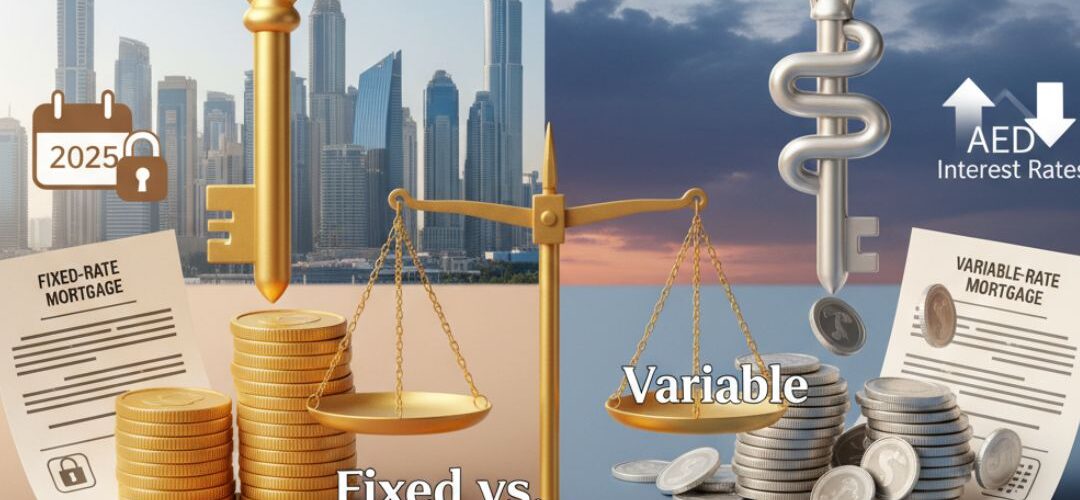
Fixed vs. Variable Mortgage UAE: Best Guide for Homebuyers 2025
Did you know over 60% of UAE homebuyers in 2025 are rethinking how rising interest rates impact their mortgage choices? Whether you’re a first-time buyer or a seasoned investor, the decision between a fixed vs. variable mortgage UAE can save — or cost — you thousands of dirhams. In this guide, you’ll learn the differences, benefits, risks, and expert tips to confidently choose the mortgage option that fits your goals. Fixed vs. Variable Mortgage UAE: What This Guide Covers Securing the right mortgage in the UAE isn’t just about finding the lowest rate. It’s about balancing financial stability with flexibility. With property prices holding strong in Dubai and Abu Dhabi, buyers today face one of the most important decisions: whether to lock in a fixed-rate mortgage or gamble on a variable-rate mortgage tied to EIBOR. Why does this matter in 2025? Global interest rates have been unpredictable, and UAE homebuyers are more cautious about repayment stability. Choosing the wrong mortgage type could mean higher monthly payments, unnecessary stress, or lost savings. In this article, you’ll discover: How fixed and variable mortgages work in the UAE. A side-by-side mortgage comparison. Real-world scenarios to decide which option suits your needs. Actionable tips for first-time buyers and investors. By the end, you’ll know exactly how to choose between fixed vs. variable mortgages with confidence. 📌 Fixed-Rate Mortgages in the UAE Point: A fixed mortgage locks your rate for a set period, usually 1–5 years. Evidence: In the UAE, banks typically offer fixed periods before reverting to variable terms, making it a safe short- to mid-term strategy. Practical Tip: Ideal for families who want repayment certainty and don’t want to worry about market swings. Pros: Stability, predictable payments, easier budgeting. Cons: Higher starting rates, penalties for early settlement, limited flexibility. 📌 Variable-Rate Mortgages in the UAE Point: A variable mortgage tracks EIBOR plus a bank’s margin, so payments rise or fall with the market. Evidence: With UAE rates tied to global benchmarks, variable mortgages fluctuate more. In 2024–2025, many borrowers experienced both lower costs and sudden increases. Practical Tip: Best for investors or short-term residents who can handle potential rate hikes. Pros: Lower initial cost, flexibility, benefits if rates fall. Cons: Uncertainty, higher risk, harder to plan long-term. 📊 Mortgage Comparison Table Feature Fixed-Rate Mortgage Variable-Rate Mortgage Stability Rate unchanged for 1–5 years Changes with EIBOR Monthly Budgeting Predictable Fluctuates Starting Cost Slightly higher Lower Best For Long-term planners Short-term investors Risk Level Low Moderate to high Which Mortgage Is Better in 2025? Scenario 1 – Long-term resident: Fixed rates provide peace of mind. Scenario 2 – Short-term investor: Variable loans may offer more flexibility and cost savings. Scenario 3 – Risk-averse buyer: Stick with fixed. Scenario 4 – Risk-tolerant buyer: Variable could save money if rates drop. 📊 2025 Quick Stats (Data Box) 57% of UAE homebuyers prefer fixed mortgages in 2025. Variable mortgages remain popular with investors, especially in Dubai Marina. The average fixed term in UAE banks is 3 years before switching to variable. Key Takeaways Fixed mortgages = stability, best for families and long-term buyers. Variable mortgages = flexibility, best for investors or short stays. UAE lenders often combine both, so always compare products. FAQ Section 1: What is the safest mortgage type in the UAE? A: A fixed-rate mortgage is considered safer since your monthly payments won’t change during the fixed period. 2: Can I switch from variable to fixed in the UAE? A: Yes, but check for fees. Many banks allow refinancing after the initial term. 3: What happens after my fixed term ends? A: Most UAE banks automatically shift your loan to a variable rate linked to EIBOR. 4: Which mortgage is cheaper in the UAE? A: Variable mortgages usually start cheaper, but fixed mortgages may save money if rates rise. Conclusion The choice between fixed vs. variable mortgage in the UAE ultimately comes down to your financial goals, risk appetite, and how long you plan to own the property. Fixed mortgages offer peace of mind, while variable loans provide flexibility and potential savings. As 2025 unfolds with shifting global rates, it’s wise to evaluate your options carefully, compare banks, and even consult a mortgage broker. By doing so, you’ll not only secure the best UAE home loan for today but also safeguard your financial stability for years ahead.

A Complete Guide to Getting a Mortgage in the UAE as an Expat
The UAE has become one of the world’s most attractive destinations for property investment, drawing expatriates from every corner of the globe. With its dynamic economy, tax-free income, and world-class lifestyle, it’s no surprise that more expats are choosing to buy property in Dubai, Abu Dhabi, and other emirates instead of renting. But for many, the first big question is: Can expats actually get a mortgage in the UAE? The answer is yes. However, the process is different from many other countries, and understanding the rules is key to a smooth property purchase. This guide breaks down everything you need to know about getting a mortgage in the UAE as an expatriate.