

How to Pay Off Mortgage Early in Dubai
Paying off your mortgage early in Dubai can significantly reduce your financial burden, minimize interest payments, and give you greater financial freedom. Whether you’re a first-time homeowner or an investor in Dubai’s thriving property market, understanding the best strategies to clear your mortgage early is key to achieving long-term financial stability. In this comprehensive guide, we will explore effective methods, smart financial planning, and the key considerations for early mortgage repayment in Dubai. Understanding Mortgage Repayment in Dubai Before we dive into the strategies, it’s essential to understand how mortgage repayment works in Dubai. Most mortgages in the UAE are structured with fixed or variable interest rates, and the loan tenure can range from 5 to 25 years. During this period, borrowers repay both the principal amount and interest through monthly installments. When you decide to pay off your mortgage early, you essentially shorten your loan tenure or reduce the total interest paid. However, the UAE’s Central Bank allows lenders to charge an early settlement fee, which is typically 1% of the outstanding balance or AED 10,000, whichever is lower. Benefits of Paying Off Your Mortgage Early Paying off your mortgage early offers several financial and psychological benefits: Save on interest payments – The sooner you repay, the less interest you pay over the life of the loan. Become debt-free sooner – Achieving financial freedom allows for better long-term investment planning. Increase property equity – Early payments improve your ownership stake in the property. Reduce financial stress – Eliminating monthly mortgage payments enhances peace of mind and stability. Improve credit score – Consistent and early repayments positively impact your credit history. Top Strategies to Pay Off Your Mortgage Early in Dubai 1. Make Extra Payments Towards Principal One of the simplest and most effective methods to pay off your mortgage early is by making additional payments towards the principal amount. Even small additional payments can drastically cut down your repayment period. For example, adding just AED 1,000 extra per month can reduce a 20-year mortgage by several years. Be sure to specify to your bank that the extra payment should go directly towards the principal and not future installments. 2. Switch to a Biweekly Payment Schedule Instead of making one monthly payment, consider switching to a biweekly payment plan. This means you’ll make half of your monthly payment every two weeks, resulting in 26 half-payments (or 13 full payments) annually — one extra payment each year. This can significantly accelerate your loan repayment without feeling like a financial strain. 3. Refinance Your Mortgage for a Lower Interest Rate Refinancing is a powerful strategy if market conditions are favorable. With competitive interest rates in Dubai, refinancing your mortgage to a lower rate can reduce your monthly payments and help you redirect savings toward principal repayment. Be sure to analyze refinancing fees, eligibility, and total cost savings before proceeding. The key is to ensure that the interest savings outweigh the administrative and processing fees. 4. Make a Lump-Sum Payment If you receive a bonus, inheritance, or any windfall income, consider using it to make a lump-sum payment on your mortgage. Many Dubai banks allow borrowers to make one-time lump-sum payments annually (up to a certain percentage of the remaining principal) without penalties. This is one of the fastest ways to cut down your mortgage tenure and interest. 5. Shorten Your Loan Tenure When you refinance, you may also choose to reduce your mortgage term from, say, 25 years to 15 years. While this increases your monthly payments, it dramatically reduces the overall interest and helps you become debt-free faster. This strategy is ideal for individuals with a stable income and strong financial discipline who can handle higher monthly obligations. 6. Avoid Lifestyle Inflation One of the key challenges many homeowners face is lifestyle inflation — increasing spending as income grows. Instead, if your income increases, continue living below your means and channel the surplus into your mortgage. This disciplined approach will help you close your loan years ahead of schedule. 7. Rent Out Part of Your Property If your Dubai property has multiple units or rooms, renting out a portion can generate passive income that you can redirect towards your mortgage payments. This strategy is especially effective for expats and investors who own villas or multi-bedroom apartments. Dubai’s rental market remains strong, making this an excellent way to accelerate debt repayment while retaining ownership. Common Mistakes to Avoid When Paying Off Your Mortgage Early While early repayment offers many advantages, there are a few common mistakes to avoid: Ignoring early settlement fees – Always check your bank’s policy to ensure the fees don’t outweigh the benefits. Draining your emergency fund – Keep enough liquidity for unforeseen expenses. Neglecting higher-interest debts – Prioritize paying off debts with higher interest before focusing on your mortgage. Failing to consult your lender – Always discuss your prepayment plans with your bank to avoid unnecessary charges. Legal Considerations in Dubai for Early Mortgage Repayment The UAE Central Bank governs mortgage-related regulations to protect borrowers. The early repayment fee is capped at 1% of the remaining loan balance, and most banks comply strictly with this regulation. However, specific terms may vary depending on the lender, so always review your mortgage agreement or seek advice from a mortgage advisor before making extra payments. Financial Planning for Early Mortgage Closure A strategic approach is essential for early mortgage repayment. Consider these planning tips: Set clear financial goals – Determine how many years earlier you want to close your loan. Create a repayment plan – Use mortgage calculators to estimate savings with extra payments. Invest smartly – If your investment returns exceed your mortgage interest rate, balance your approach between investing and repayment. Review annually – Reassess your mortgage strategy each year to align with income changes and market conditions. FAQs 1. Can I pay off my mortgage early in Dubai without penalty?Most banks charge an early repayment fee capped at 1% of the remaining balance or AED 10,000, whichever

UAE Central Bank Mortgage Rules
UAE Central Bank Mortgage Rules: Everything You Need to Know in 2025 The UAE Central Bank Mortgage Rules play a crucial role in defining how residents, expatriates, and investors can finance property purchases in the UAE. These regulations ensure transparency, protect borrowers, and maintain financial stability across the real estate and banking sectors. Whether you are buying your first home in Dubai, investing in Abu Dhabi real estate, or seeking to refinance your mortgage, understanding these rules is essential. Understanding the UAE Central Bank’s Role in Mortgage Regulation The Central Bank of the UAE (CBUAE) is the governing authority responsible for supervising banks and financial institutions within the country. Its primary goal is to maintain monetary and financial stability while ensuring consumer protection. In the mortgage sector, the CBUAE sets loan-to-value (LTV) ratios, debt-burden ratios (DBR), and eligibility criteria to promote responsible lending and safeguard borrowers from financial distress. Loan-to-Value (LTV) Ratio Guidelines The Loan-to-Value ratio determines how much of the property’s value can be financed through a mortgage. The remainder must be paid as a down payment by the buyer. Here’s a breakdown of the latest LTV limits under the UAE Central Bank rules: For UAE Nationals First Property Purchase: Up to 80% LTV for properties valued below AED 5 million. Properties Above AED 5 Million: Up to 70% LTV. Second or Investment Property: Up to 65% LTV. For Expatriates First Property Purchase: Up to 75% LTV for properties under AED 5 million. Properties Above AED 5 Million: Up to 65% LTV. Second or Investment Property: Up to 60% LTV. Off-Plan Properties For both nationals and expatriates, financing is capped at 50% LTV for off-plan (under-construction) properties. These restrictions are designed to ensure that property buyers maintain a healthy equity position and avoid overleveraging. Debt-Burden Ratio (DBR) – Managing Borrower Affordability The Debt-Burden Ratio (DBR) is another key metric established by the Central Bank. It limits the total amount of a borrower’s monthly debt repayments to 50% of their monthly income. This rule ensures that homeowners can manage their mortgage payments without compromising their financial wellbeing. The DBR includes: Mortgage repayments Credit card debt Personal loans Car loans Any other financial obligations For example, if a borrower earns AED 20,000 per month, their total monthly debt payments cannot exceed AED 10,000. Mortgage Tenure and Age Limit The maximum mortgage tenure allowed under the UAE Central Bank rules is 25 years. Additionally, the maximum borrower age at loan maturity is: 70 years for UAE Nationals 65 years for Expatriates Banks and lenders are required to assess these limits before approving a mortgage, ensuring long-term affordability and reduced risk. Minimum Salary and Eligibility Criteria Each bank in the UAE has its own minimum salary requirement for mortgage eligibility. However, most lenders align with the Central Bank’s general guidelines: Minimum monthly income: AED 10,000 (for salaried individuals) Minimum down payment: 20% (for expats) and 15% (for UAE nationals) Lenders also consider: Employment stability Length of service Existing financial obligations Credit score and repayment history These factors collectively determine your mortgage approval and interest rate. Refinancing Rules under the UAE Central Bank Borrowers can refinance their mortgage to take advantage of better interest rates or terms. However, refinancing is governed by specific Central Bank conditions: LTV ratios for refinanced properties remain consistent with purchase limits. All refinancing offers must undergo affordability assessments. Early settlement or refinancing may involve processing fees or penalties, typically capped by the Central Bank to protect consumers. This structure promotes fairness and prevents financial institutions from exploiting borrowers through hidden costs. Mortgage for Non-Residents and Foreign Investors The UAE welcomes non-resident investors, but their mortgage access is more restricted. Under Central Bank guidelines: Only selected banks can offer loans to non-residents. Maximum LTV is generally 50–60%. Proof of stable international income and creditworthiness is required. These rules make the UAE an attractive yet regulated destination for global real estate investors, particularly in cities like Dubai, Abu Dhabi, and Sharjah. Types of Mortgages Allowed by UAE Central Bank The Central Bank allows a variety of mortgage structures to suit different borrower needs: Fixed-Rate Mortgages: Interest rate remains constant for a specific period (usually 1–5 years). Variable-Rate Mortgages: Interest rate fluctuates based on the EIBOR (Emirates Interbank Offered Rate). Offset Mortgages: Borrowers can link their savings to reduce the interest payable on their loan. Islamic Home Financing: Offered under Sharia-compliant structures like Ijara or Murabaha, which avoid interest-based lending. Mortgage Insurance and Protection Requirements The Central Bank mandates mortgage life insurance for all borrowers to ensure that, in the event of death or disability, the outstanding loan is covered. Additionally, some lenders may require property insurance to protect the asset against fire, damage, or natural disasters. This ensures comprehensive protection for both lenders and homeowners. Key Benefits of the UAE Central Bank Mortgage Rules Promotes financial stability in the real estate sector Prevents over-lending and unsustainable borrowing Protects consumer rights and ensures transparency Encourages responsible home ownership Supports long-term market growth through fair practices These regulations are vital for maintaining trust and balance between banks, investors, and consumers. Recent Updates to UAE Mortgage Regulations (2025) The UAE Central Bank continues to refine its mortgage policies to align with evolving market trends. Recent updates include: Enhanced digital mortgage approval processes Increased transparency in mortgage fees Standardized early repayment terms across banks Stronger enforcement of affordability checks These measures aim to create a more competitive, fair, and accessible housing finance environment. Frequently Asked Questions 1. What is the maximum loan-to-value (LTV) ratio in the UAE?For expats, it’s 75% for the first property below AED 5 million and 65% above. For UAE nationals, it can go up to 80%. 2. How long can I take a mortgage for in the UAE?The maximum tenure allowed is 25 years. 3. Can non-residents get a mortgage in the UAE?Yes, but only from select banks and usually up to 50–60% LTV. 4. What is the debt-burden ratio (DBR) in UAE mortgage rules?Your total debt payments cannot exceed
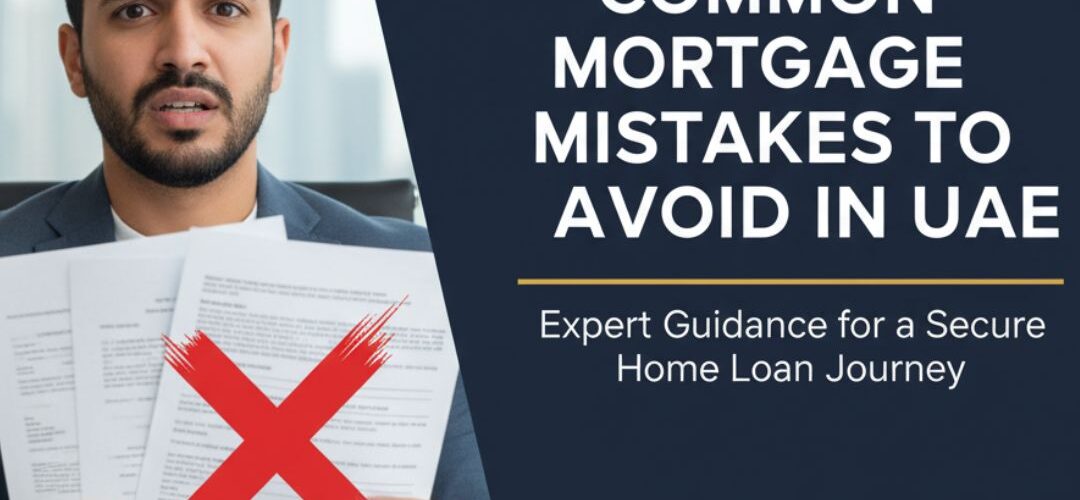
Common Mortgage Mistakes to Avoid in UAE
Buying a home in the UAE is one of the most significant financial decisions anyone can make. Whether you’re a first-time buyer or an experienced investor, understanding the mortgage landscape is crucial. The UAE offers a diverse range of mortgage products, but many buyers make costly mistakes due to a lack of awareness or preparation. In this guide, we highlight the most common mortgage mistakes to avoid in the UAE to help you secure your dream property with confidence and financial stability. 1. Ignoring Mortgage Pre-Approval One of the biggest mistakes homebuyers make is skipping the mortgage pre-approval process. Pre-approval gives you a clear understanding of how much a lender is willing to finance based on your income, credit score, and financial history. Without it, you may waste time viewing properties that are beyond your budget or risk losing a property to another buyer who is pre-approved. Getting pre-approved not only strengthens your negotiation position but also saves you from surprises during the final approval stage. In the UAE, most banks offer pre-approval valid for up to 60–90 days. 2. Not Comparing Mortgage Offers Many buyers go with the first mortgage offer they receive without shopping around. This can be a costly mistake. Mortgage interest rates, processing fees, and terms vary widely across UAE banks. Comparing offers from multiple lenders ensures you secure the best mortgage rate and avoid unnecessary fees. You can use mortgage comparison platforms or consult independent mortgage brokers who can assess your eligibility and recommend the most competitive offers from top UAE banks such as Emirates NBD, Mashreq, ADCB, and FAB. 3. Overlooking the Total Cost of Borrowing A lower interest rate doesn’t always mean a cheaper mortgage. Homebuyers often ignore hidden costs such as: Processing fees (typically 1% of the loan amount) Property valuation fees Early settlement or partial payment penalties Life insurance and property insurance premiums Land Department registration fees These costs can add up significantly. Always calculate the total cost of ownership, not just the monthly installment, before finalizing your mortgage. 4. Choosing the Wrong Type of Interest Rate In the UAE, borrowers can choose between fixed-rate and variable-rate mortgages. Selecting the wrong one for your financial situation can have long-term consequences. Fixed-rate mortgages offer stable payments throughout the term, ideal for buyers who want predictability. Variable-rate mortgages fluctuate with market interest rates, which may lead to higher payments if rates rise. If you’re unsure which option suits you, seek advice from a financial expert who understands UAE’s mortgage trends and Central Bank policies. 5. Borrowing the Maximum Loan Amount Just because a bank is willing to lend you a large amount doesn’t mean you should borrow it all. Overextending yourself financially can lead to loan repayment stress and reduced flexibility. In the UAE, the Central Bank allows expats to borrow up to 75% of the property value, but it’s wise to keep your debt-to-income ratio manageable — ideally, below 50%. Consider future expenses like education, emergencies, or job changes before committing to a large mortgage. 6. Ignoring Early Settlement Clauses Many buyers are unaware that UAE banks charge penalties for early repayment. These fees are usually between 1%–3% of the outstanding balance. While paying off your mortgage early sounds great, the penalty can offset potential savings. Always review your loan agreement’s early settlement clause to understand how much you’ll owe if you choose to close the loan early. 7. Not Understanding Loan-to-Value (LTV) Ratio The Loan-to-Value (LTV) ratio determines how much of the property’s value a bank is willing to finance. The UAE Central Bank regulates LTV ratios as follows: Expats: Up to 75% for properties under AED 5 million UAE Nationals: Up to 80% for properties under AED 5 million For second homes or investments: Typically 60% Failing to account for the LTV can lead to financing shortfalls at the last minute, forcing you to come up with a larger down payment unexpectedly. 8. Not Checking Credit Score and Financial History A poor credit score or inconsistent financial record can lead to mortgage rejection or higher interest rates. Before applying for a mortgage, check your credit report from Al Etihad Credit Bureau (AECB). Clear outstanding debts, pay bills on time, and maintain a stable income to enhance your creditworthiness. A good credit score (700+) can help you negotiate lower interest rates and better loan terms. 9. Failing to Budget for Ongoing Costs Many buyers in the UAE forget to budget for recurring expenses beyond their monthly mortgage payments. These include: Service charges (building maintenance fees) Utility bills (DEWA, ADDC, SEWA, etc.) Annual property insurance Community fees Ignoring these costs can strain your finances and make it difficult to meet monthly obligations. 10. Not Reading the Fine Print Mortgage contracts in the UAE can be complex. Many borrowers sign without thoroughly reviewing terms and conditions, including clauses about: Interest rate adjustments Missed payment penalties Insurance requirements Early repayment rules Always read the fine print carefully or have a mortgage consultant or lawyer review it before signing. Transparency at this stage can save you from disputes and unexpected expenses later. 11. Skipping Professional Advice Navigating the UAE mortgage system without professional help can be overwhelming. Mortgage brokers, real estate agents, and legal advisors can provide valuable insights into the process. They can negotiate better terms, identify hidden fees, and ensure compliance with UAE Central Bank regulations. While their services come at a cost, they often save you more money in the long run by preventing major financial mistakes. 12. Neglecting Future Financial Planning Finally, one of the most critical yet overlooked mistakes is failing to plan for future financial changes. Consider what will happen if interest rates rise, property values drop, or your income changes. Build a financial buffer and ensure your mortgage plan remains sustainable under different scenarios. A proactive approach ensures you stay financially secure throughout your mortgage term. FAQs 1. What are the most common mortgage mistakes in the UAE?The most common mistakes include skipping pre-approval, ignoring hidden fees,

Self-Employed Mortgage in Dubai
Self-Employed Mortgage in Dubai – A Complete Guide for Entrepreneurs and Business Owners Securing a mortgage in Dubai as a self-employed individual can seem complex, but with the right strategy, documentation, and lender, it’s entirely achievable. At Thiyagi Digital, we understand the financial aspirations of entrepreneurs who dream of owning property in Dubai — whether it’s a luxurious apartment overlooking the Marina or a family villa in Arabian Ranches. This detailed guide will walk you through every aspect of obtaining a self-employed mortgage in Dubai, from eligibility criteria to documentation and expert tips for approval. Understanding the Self-Employed Mortgage in Dubai A self-employed mortgage is a type of home loan offered to individuals who run their own businesses or work as freelancers instead of being salaried employees. Unlike traditional mortgage applicants, self-employed individuals must demonstrate financial stability and consistent income through business records rather than pay slips. Dubai’s mortgage market is open and competitive, with local and international banks offering flexible options to self-employed professionals. However, lenders assess applications based on business performance, profit consistency, and bank statements, not just revenue. Eligibility Criteria for Self-Employed Mortgage in Dubai To qualify for a self-employed mortgage, you must meet specific requirements set by UAE lenders. While each bank has its criteria, the following are the most common factors considered: Minimum Business Experience:Most banks require a minimum of 2 to 3 years of self-employment history in the UAE or abroad. Business Turnover and Profitability:Your business should show a stable annual turnover and consistent profit margins. Lenders may ask for audited financial statements to verify this. Minimum Income Requirements:A typical requirement is a minimum monthly income of AED 25,000–30,000, depending on the lender. Credit Score:A strong credit history and Al Etihad Credit Bureau (AECB) score are crucial for loan approval. Property Type and Value:Mortgages are usually available for ready or completed properties, not off-plan units. Required Documents for Self-Employed Mortgage in Dubai When applying for a mortgage as a self-employed individual, documentation is the key to proving your financial credibility. Below is a list of essential documents most banks request: Valid passport, visa, and Emirates ID Trade license of your business 6–12 months of personal and business bank statements Audited financial statements for the last two years Memorandum of Association (MOA) or partnership agreements Tax returns or proof of overseas income (if applicable) Proof of business ownership or shareholding certificate Property sale agreement or title deed (for final approval) Providing accurate and complete documents significantly speeds up the loan approval process. How Much You Can Borrow – Loan-to-Value Ratio (LTV) In Dubai, the loan-to-value (LTV) ratio defines how much you can borrow compared to the property value. For self-employed individuals, the LTV ratio depends on residency and property type: UAE Nationals: Up to 85% LTV Expat Residents: Up to 80% LTV Non-Residents: Up to 60–70% LTV For example, if you are an expat purchasing a property worth AED 1 million, you may qualify for a mortgage of up to AED 800,000, and you must pay a down payment of AED 200,000. Interest Rates for Self-Employed Mortgages Interest rates in Dubai vary based on the bank, applicant profile, and loan term. The two common types of interest rates are: Fixed Interest Rate:The rate remains constant for a specific period (1–5 years). Ideal for borrowers who prefer predictable payments. Variable Interest Rate:The rate fluctuates based on the EIBOR (Emirates Interbank Offered Rate). This option can offer savings if market rates fall. Typical self-employed mortgage interest rates range between 3.99% and 5.49%, depending on your eligibility and financial stability. Top Banks Offering Self-Employed Mortgages in Dubai Several UAE banks and financial institutions offer competitive mortgage options for self-employed individuals, including: Emirates NBD Mashreq Bank HSBC UAE ADCB (Abu Dhabi Commercial Bank) RAKBANK Standard Chartered Bank Dubai Islamic Bank Each lender has unique policies for self-employed applicants. Working with a mortgage broker can help you identify the best deal and streamline documentation. Advantages of a Self-Employed Mortgage in Dubai Flexible Income Assessment: Banks evaluate business cash flow instead of a fixed salary. Wide Range of Loan Options: Choose from fixed, variable, or hybrid interest rates. Tax Benefits: In many cases, mortgage interest payments can be considered for financial structuring benefits. Property Investment Opportunities: Self-employed individuals can leverage property ownership to grow long-term wealth. Challenges Self-Employed Borrowers Face While opportunities are vast, challenges exist too: Income Fluctuations: Lenders may view inconsistent income as higher risk. Complex Documentation: More paperwork than salaried applicants. Higher Interest Rates: Some banks may charge slightly higher rates for self-employed applicants due to perceived risk. Strict Eligibility Criteria: New business owners may face difficulty if their company is under two years old. However, with strong financial records, clear documentation, and a good credit score, these challenges can be overcome easily. Tips to Improve Your Mortgage Approval Chances Maintain a Healthy Credit Score: Pay bills and credit cards on time. Prepare Clear Financial Records: Keep audited statements and tax filings up-to-date. Reduce Existing Debts: Lower your debt-to-income ratio before applying. Show Consistent Business Revenue: Demonstrate stable monthly earnings. Work with a Mortgage Advisor: Experts can help negotiate better rates and simplify complex paperwork. Self-Employed Mortgage for Non-Residents in Dubai Dubai welcomes foreign investors, and non-resident self-employed individuals can also apply for mortgages. However, banks often require: Higher down payments (30–40%) Proof of business income from abroad Minimum property value (usually AED 1 million) This option is ideal for entrepreneurs who wish to own a second home or investment property in Dubai while operating businesses overseas. FAQs 1. Can self-employed individuals get a mortgage in Dubai?Yes, self-employed individuals can get a mortgage if they provide sufficient financial proof and business records. 2. What is the minimum income required for a self-employed mortgage?Typically, banks require a minimum monthly income of AED 25,000 to AED 30,000. 3. Which banks offer the best self-employed mortgage in Dubai?Top lenders include Emirates NBD, ADCB, Mashreq Bank, and Dubai Islamic Bank. 4. Do self-employed mortgages have higher interest rates?Yes, slightly higher than
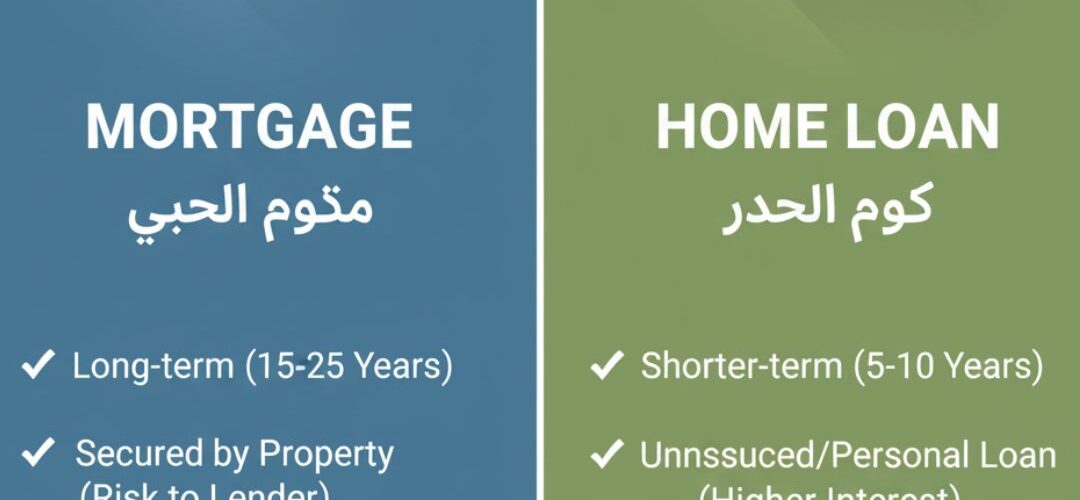
Mortgage vs Home Loan: Difference in UAE
When it comes to buying a property in the UAE, understanding the difference between a mortgage and a home loan is essential. Both terms are often used interchangeably, but in reality, they serve different purposes, have unique structures, and cater to specific financial needs. In this comprehensive guide, we explore the key differences between a mortgage and a home loan in the UAE, their eligibility requirements, benefits, and which one might be the better choice for your real estate goals. What Is a Mortgage in the UAE? A mortgage is a secured loan that enables individuals to purchase a property while using that same property as collateral. In the UAE, banks and financial institutions provide mortgages to both UAE nationals and expatriates, allowing them to finance up to 80–85% of the property’s value. The property ownership remains with the buyer, but the bank holds a lien on it until the mortgage is fully repaid. This means that if the borrower fails to make payments, the lender can seize the property to recover the loan amount. Key characteristics of a mortgage in the UAE include: Long repayment tenure (up to 25 years) Fixed or variable interest rates Legal documentation and property evaluation required Applicable for ready and off-plan properties Mortgages are ideal for individuals looking to purchase residential or commercial properties for investment or personal use. What Is a Home Loan in the UAE? A home loan, while similar in concept, is a broader term that includes different types of financing for housing-related expenses. In many cases, a home loan can cover construction, renovation, or home improvement, not just the purchase of property. In the UAE, home loans are typically offered under mortgage frameworks, but some banks differentiate between purchase mortgages and home improvement loans. The latter are usually unsecured or partially secured, depending on the borrower’s profile and credit score. Key features of home loans in the UAE include: Covers construction, renovation, or extension costs May not always require full property collateral Shorter repayment tenure than standard mortgages Higher interest rates for unsecured loans Mortgage vs Home Loan: The Core Difference The main difference between a mortgage and a home loan in the UAE lies in purpose and collateral. A mortgage is always secured by the property being purchased, while a home loan may or may not involve property as security. Factor Mortgage Home Loan Purpose To purchase a property To build, renovate, or improve a property Collateral Property purchased May or may not be secured Tenure Up to 25 years Usually 5–15 years Interest Rate Lower (secured loan) Higher (unsecured loan) Loan Amount Based on property value Based on borrower’s income and creditworthiness Ownership Bank holds lien until repayment Full ownership may remain with borrower In short, while a mortgage focuses on property acquisition, a home loan caters to property enhancement or development. Types of Mortgages Available in the UAE There are several types of mortgages tailored to different financial needs and goals. 1. Fixed-Rate Mortgage The interest rate remains constant throughout the loan period, offering predictable monthly payments. Ideal for those who prefer financial stability. 2. Variable-Rate Mortgage The interest rate fluctuates based on the UAE Central Bank’s EIBOR rates. It’s suitable for borrowers who can tolerate market volatility in exchange for possible savings during low-interest periods. 3. Offset Mortgage This type links the borrower’s savings or current account to the mortgage. Any balance in the linked account helps reduce interest payments on the outstanding loan. 4. Islamic Mortgage (Sharia-Compliant) Under Islamic banking principles, interest (riba) is prohibited. Instead, banks offer Ijara (lease-based) or Murabaha (cost-plus financing) structures, where the bank buys the property and leases or resells it to the borrower at an agreed profit margin. Eligibility Criteria for Mortgages and Home Loans in the UAE Whether applying for a mortgage or a home loan, borrowers must meet specific eligibility requirements set by UAE banks. Basic criteria include: Minimum monthly income: AED 10,000 to AED 15,000 Stable employment or verified business income Valid UAE residency visa (for expatriates) Minimum age: 21 years Credit score above 650 (AECB) Most banks require a down payment of 15–25% for expatriates and 10–20% for UAE nationals. The loan-to-value (LTV) ratio varies depending on the property type and buyer’s profile. Documents Required Applicants must provide the following: Copy of Emirates ID and passport Salary certificate or trade license Recent bank statements (3–6 months) Property sale agreement or title deed Proof of down payment Additional documentation may be required for self-employed applicants or off-plan properties. Interest Rates and Repayment Terms In the UAE, mortgage interest rates typically range between 3.5% to 5.5% per annum, depending on the bank and borrower’s profile. Home loans, especially unsecured ones, can have higher rates of 5% to 7%. Repayment terms for mortgages can extend up to 25 years, whereas home loans generally range from 5 to 15 years. Borrowers may choose between fixed, variable, or hybrid interest structures to manage risk and flexibility. Pros and Cons of Mortgages and Home Loans Mortgage Pros Lower interest rates Long repayment tenure Ideal for property investment Can leverage property appreciation Mortgage Cons Requires collateral Longer approval process Penalties for early settlement Home Loan Pros Flexible usage (renovation, construction) Quicker approval for smaller amounts Suitable for homeowners improving existing properties Home Loan Cons Higher interest rates Shorter repayment periods May require strong credit profile Which Is Better: Mortgage or Home Loan in the UAE? Choosing between a mortgage and a home loan depends on your financial objective. If your goal is to buy a new property, a mortgage is the right choice—it provides access to higher funding with manageable interest rates and extended tenures. However, if you already own a property and wish to upgrade, renovate, or expand, a home loan might be more suitable due to its flexible purpose and faster processing. For expatriates investing in UAE real estate, mortgages offer an excellent opportunity to own property without full upfront payment, making them a cornerstone of property financing in

Top Mortgage Brokers in Dubai – Expert Advice, Low Rates & Seamless Financing
When it comes to buying property in Dubai, finding the best mortgage brokers in Dubai is crucial. With the city’s vibrant real estate market and ever-evolving financial regulations, securing the right mortgage can be challenging. At Thiyagi Digital, we’ve done the research to help you understand the top mortgage brokers in Dubai who can simplify your home financing journey, negotiate the lowest interest rates, and ensure a smooth approval process. Why You Need a Mortgage Broker in Dubai Dubai’s mortgage market is complex, with options from both local and international banks. A professional mortgage broker in Dubai helps bridge the gap between you and financial institutions, offering: Access to multiple lenders – instead of approaching banks individually, brokers present you with several loan options. Negotiation power – brokers often secure lower rates and better terms thanks to established relationships with banks. Time and cost savings – brokers handle paperwork, eligibility checks, and documentation on your behalf. Expert guidance – they help you understand down payments, fixed vs variable rates, and eligibility requirements. A reliable broker acts as your financial advisor, helping you make an informed decision that aligns with your budget and long-term goals. Top Mortgage Brokers in Dubai Below is a list of the best mortgage brokers in Dubai known for their transparency, customer service, and expertise. 1. 7Seas Mortgage Broker Dubai 7Seas Mortgage stands as one of the leading mortgage brokers in Dubai, renowned for its expertise, personalized approach, and deep connections with UAE’s top banks. The company helps clients — from first-time homebuyers to seasoned investors — secure the most competitive mortgage rates in the market. Why Choose 7Seas Mortgage: Access to exclusive mortgage deals with major UAE banks. Expertise in residential, commercial, and investment property financing. Tailored mortgage solutions for UAE residents and expatriates. Dedicated advisors providing end-to-end support from pre-approval to property handover. Transparent fees and clear communication throughout the process. 7Seas Mortgage has built its reputation on professionalism, speed, and customer satisfaction, making it a go-to choice for those looking to navigate Dubai’s property finance landscape efficiently. 2. Mortgage Finder Dubai Mortgage Finder, part of Property Finder Group, is one of the most trusted names in the UAE mortgage industry. Their team of qualified advisors offers free consultations and has deep relationships with leading UAE banks. Why Choose Them: Over 15 years of experience in the UAE mortgage market. Works with 25+ banks across the UAE. Provides both residential and investment mortgage options. Excellent reputation for helping expatriates secure financing with ease. 3. Holo Mortgage Broker Holo is a digital-first mortgage platform in Dubai, offering instant eligibility checks, AI-driven recommendations, and online application tracking. They combine technology with human expertise to make mortgage processing faster and simpler. Key Features: 100% online application process. Transparent fee structure. Real-time mortgage comparisons from top UAE banks. Personalized support from certified advisors. 4. Mortgage Market Dubai Mortgage Market specializes in securing low-interest home loans and refinancing solutions. They are known for their bespoke mortgage plans tailored to self-employed professionals and expatriates. Why They Stand Out: Partnered with major banks like Emirates NBD, HSBC, Mashreq, and ADIB. Offers pre-approval services within 48 hours. Expert advice on buy-to-let and refinancing options. 5. Pure Mortgage Pure Mortgage has built a strong reputation for helping clients with complex financial situations. Whether you’re a first-time buyer or an investor, they offer transparent and flexible mortgage solutions. Highlights: Free mortgage consultations. Fixed and variable rate mortgage options. In-depth comparison of UAE and international mortgage products. Dedicated account managers for each client. 6. Mortgage Souq A leading mortgage advisory firm, Mortgage Souq brings a personalized approach to every client. They specialize in UAE National and Expat mortgages, making them ideal for overseas buyers investing in Dubai real estate. What Makes Them Unique: Expert guidance on Sharia-compliant home financing. Competitive rates from over 20 banks. Assistance with mortgage refinancing and balance transfers. Types of Mortgages Available in Dubai Understanding the types of mortgages available helps you choose wisely. Top mortgage brokers in Dubai usually offer the following: 1. Fixed-Rate Mortgages Your interest rate remains constant throughout the loan term, ensuring predictable monthly payments. Ideal for those seeking stability. 2. Variable-Rate Mortgages Also known as floating-rate mortgages, the interest rate fluctuates with market conditions. This can result in lower rates initially but variable payments later. 3. Buy-to-Let Mortgages Perfect for investors buying property to rent out. These mortgages come with flexible repayment terms and are available to both UAE residents and non-residents. 4. Islamic Home Finance For those seeking Sharia-compliant options, banks offer Murabaha and Ijara financing models. Mortgage brokers specializing in Islamic finance can guide you through these ethical, interest-free alternatives. Eligibility Criteria for Mortgages in Dubai While eligibility varies by bank, the general requirements include: Minimum monthly income: AED 15,000 (varies for self-employed individuals). Employment tenure: At least 6 months with the current employer. Age: 21 to 65 years. Credit score: A good credit history is crucial for loan approval. Down payment: UAE Nationals: Minimum 15% of the property value. Expats: Minimum 20–25% of the property value. Professional brokers help you assess eligibility and prepare documents like salary certificates, bank statements, Emirates ID, and proof of address. Benefits of Using a Mortgage Broker in Dubai Choosing a top-rated broker gives you several advantages: Better interest rates: Brokers negotiate special rates not available to the public. Tailored mortgage options: Customized solutions based on your financial profile. Fast pre-approvals: Many brokers secure loan pre-approval within 24–48 hours. Expert legal and financial advice: Guidance through Dubai’s mortgage regulations. Hassle-free documentation: Brokers manage end-to-end paperwork, saving you time. How to Choose the Right Mortgage Broker When selecting a mortgage broker in Dubai, consider: Experience: Years of operation and client success stories. Bank partnerships: Access to multiple lenders increases your options. Transparency: Ensure there are no hidden fees or commissions. Customer reviews: Check Google and Trustpilot ratings. Communication: Choose a broker who explains all terms clearly. Top Banks Offering Mortgages in Dubai Many leading banks work closely with brokers

October 8, 2025
Mortgage for Villas in Dubai: What You Need to Know
Owning a luxurious villa in Dubai is a dream for many — and thanks to the growing availability of villa mortgages, it’s now more achievable than ever. Whether you’re an expat looking for a home in a peaceful community or an investor seeking high returns, understanding the mortgage process for villas in Dubai is essential. In this comprehensive guide, we explain everything — from eligibility and down payments to loan types, interest rates, and property ownership rules. Understanding Villa Mortgages in Dubai A villa mortgage in Dubai is a financing option provided by banks and lenders that enables buyers to purchase villas by paying a portion of the property value upfront (the down payment) and repaying the remaining amount over time with interest. These mortgages are available to both UAE nationals and expatriates, provided they meet the bank’s eligibility and credit requirements. Unlike apartment mortgages, villa loans often involve higher property values, larger down payments, and stricter eligibility checks, making it crucial for buyers to plan their finances carefully. Eligibility Criteria for a Villa Mortgage in Dubai To qualify for a villa mortgage in Dubai, lenders evaluate several factors. The key requirements include: Minimum Age: Applicants must be at least 21 years old. Income Level: Minimum monthly income generally starts from AED 15,000 for salaried individuals and AED 25,000 for self-employed applicants. Employment Stability: Most banks require 6 months to 2 years of stable employment history or consistent business operations. Credit Score: A strong AECB credit score (650+) significantly improves approval chances. Nationality: Mortgages are available for UAE residents, expatriates, and non-residents, though terms differ slightly. Debt-to-Income Ratio: Total debt obligations must not exceed 50% of the applicant’s monthly income. Banks may also assess existing loans, credit card usage, and overall financial stability before granting approval. Required Documents for Villa Mortgage Application To streamline the approval process, prepare the following documents in advance: Valid passport and Emirates ID Visa and residence permit (for expats) Proof of income (salary certificate or audited financials for business owners) Bank statements (last 6–12 months) Property documents such as sale agreement or title deed Liability letter showing existing debts (if any) Providing accurate and complete documentation helps lenders process your mortgage faster and minimizes approval delays. Types of Villa Mortgages Available in Dubai Dubai offers multiple mortgage types tailored to different buyer needs. The most common options include: 1. Fixed-Rate Mortgage With a fixed-rate mortgage, the interest rate remains constant for a set period — typically 1 to 5 years. This option provides payment stability and protection from market fluctuations, making it ideal for buyers who prefer predictable monthly installments. 2. Variable (Floating) Rate Mortgage Here, the interest rate changes based on market conditions and the EIBOR (Emirates Interbank Offered Rate). While initial payments might be lower, the rate can rise or fall, impacting monthly obligations. It suits borrowers comfortable with market-linked risks. 3. Offset Mortgage An offset mortgage allows borrowers to link their savings or current account to their mortgage account. The bank calculates interest only on the outstanding balance after deducting linked deposits, effectively reducing the interest cost and loan tenure. 4. Islamic Home Finance For buyers seeking Sharia-compliant financing, banks offer Islamic mortgage products such as Ijara (leasing) and Murabaha (cost-plus sale), ensuring compliance with Islamic finance principles while enabling villa ownership. Down Payment and Loan-to-Value (LTV) Ratios The down payment requirement in Dubai varies depending on nationality and property type: UAE Nationals: Minimum 20% of property value Expatriates (Residents): Minimum 25% for properties below AED 5 million Non-Residents: Minimum 30% or more The Loan-to-Value (LTV) ratio determines how much of the property value the bank will finance. For example, if the villa costs AED 4 million, an expat buyer must pay at least AED 1 million upfront, while the remaining AED 3 million can be financed through a mortgage. Interest Rates and Repayment Period Interest rates on villa mortgages in Dubai generally range from 3% to 6% per annum, depending on the bank, loan amount, and borrower profile. The repayment term can extend up to 25 years, giving buyers ample flexibility to manage payments. Pro Tip: Comparing offers from multiple banks and using online mortgage calculators can help estimate your monthly EMIs and total repayment cost more accurately. Best Areas to Buy Villas in Dubai Dubai offers a wide selection of villa communities catering to different lifestyles and budgets. Some of the most popular areas for villa ownership include: Arabian Ranches: Family-friendly, with lush greenery and golf courses Palm Jumeirah: Luxury beachfront villas with premium amenities Dubai Hills Estate: Modern design and proximity to schools and malls DAMAC Hills: Affordable villas with sports and leisure facilities The Springs and Meadows: Ideal for families seeking serenity and accessibility These communities not only provide comfort and privacy but also promise strong rental yields and capital appreciation over time. Steps to Get a Villa Mortgage in Dubai Assess Eligibility: Check income, employment, and credit score. Compare Lenders: Evaluate interest rates, LTV ratios, and repayment terms. Get Pre-Approval: Obtain a mortgage pre-approval letter to confirm your borrowing capacity. Select Property: Choose a villa in a freehold area if you’re an expat. Submit Documents: Provide all required documents to your lender. Property Valuation: The bank will assess the property’s market value. Final Approval & Disbursement: Once approved, the funds are released to the seller, and the ownership transfer is completed. Key Considerations Before Taking a Villa Mortgage Before finalizing your mortgage, consider these vital aspects: Hidden Fees: Always review fees like valuation, processing, and early settlement charges. Prepayment Terms: Some banks charge penalties for early repayments. Insurance Requirements: Most lenders require life and property insurance. Market Trends: Keep an eye on Dubai’s real estate market to make informed decisions. Long-Term Affordability: Choose a loan term that aligns with your income stability and financial goals. Benefits of Getting a Villa Mortgage in Dubai Flexible Ownership for Expats Long-Term Payment Options (up to 25 years) Tax-Free Property Income High Return on Investment (ROI) Option to Refinance for

October 8, 2025
Mortgage Loan Calculator UAE: How It Works
Navigating the mortgage process in the UAE can be complex, especially for first-time homebuyers or expats. That’s where a Mortgage Loan Calculator UAE becomes an invaluable tool — offering clarity, accuracy, and instant insights into your potential home financing. In this comprehensive guide, we’ll break down exactly how mortgage calculators work, how to use them effectively, and what factors you should consider before making your property investment in Dubai, Abu Dhabi, Sharjah, or anywhere across the Emirates. What Is a Mortgage Loan Calculator in the UAE? A Mortgage Loan Calculator UAE is an online financial tool designed to estimate your monthly mortgage payments, total loan cost, and interest breakdown based on factors such as loan amount, tenure, and interest rate. Whether you’re a UAE national, expatriate, or investor, this tool helps you make informed decisions about buying or refinancing a property. By entering details like loan amount, interest rate, and loan tenure, you can instantly determine the EMI (Equated Monthly Installment) you’ll need to pay. This empowers you to budget wisely and assess which mortgage option aligns with your financial goals. How Does a Mortgage Calculator Work in the UAE? The UAE mortgage calculator uses a mathematical formula to calculate your monthly repayments: EMI = [P × R × (1+R)^N] / [(1+R)^N – 1] Where: P = Principal loan amount R = Monthly interest rate (annual rate ÷ 12 ÷ 100) N = Loan tenure in months This formula ensures accuracy by considering compound interest, which is common in UAE home loan structures. For example, if you borrow AED 1,000,000 at a 4% annual interest rate over 25 years, your monthly EMI would be approximately AED 5,275. The calculator also reveals how much of your payment goes toward interest versus the principal over time. Benefits of Using a Mortgage Loan Calculator UAE 1. Accurate Financial Planning With just a few clicks, you can evaluate affordability, compare different loan terms, and identify the most cost-effective mortgage plan. It removes guesswork and helps you align your investment with your long-term goals. 2. Compare Multiple Lenders Different banks in the UAE—such as Emirates NBD, HSBC, Mashreq, FAB, and ADIB—offer varying interest rates and terms. The calculator lets you compare rates instantly, giving you the upper hand in negotiation and selection. 3. Save Time and Effort Instead of manually crunching numbers or consulting multiple brokers, the calculator delivers instant results. This saves time and simplifies decision-making. 4. Understand Loan Amortization Most calculators in the UAE provide a detailed amortization schedule, showing how your loan balance decreases over time. It clearly separates interest from the principal, helping you track your progress. 5. Plan for Extra Payments You can experiment with prepayment options to see how lump-sum payments reduce your tenure and total interest cost — giving you a roadmap to becoming debt-free faster. Key Factors That Influence Mortgage Calculations in the UAE When using a UAE home loan calculator, understanding the following parameters ensures more accurate results: 1. Loan Amount This is the amount you plan to borrow from the bank. Most UAE banks finance up to 80% of the property value for UAE nationals and 75% for expatriates. 2. Interest Rate Mortgage interest rates in the UAE can be fixed, variable, or hybrid. Fixed rates provide stability, while variable rates can change based on market trends. Always check EIBOR (Emirates Interbank Offered Rate) updates before locking in your loan. 3. Loan Tenure Typically, UAE mortgage tenures range from 5 to 25 years. While longer terms mean lower EMIs, they also lead to higher total interest payments. The calculator helps strike the right balance between affordability and long-term cost. 4. Down Payment In the UAE, the minimum down payment varies by residency: UAE Nationals: 20% of property value Expats: 25% for properties below AED 5 millionYour down payment significantly affects the loan-to-value (LTV) ratio and EMI. 5. Fees and Charges Most banks include processing fees, valuation charges, early settlement fees, and life insurance premiums. Incorporating these into the calculator gives a more realistic monthly estimate. Step-by-Step Guide: How to Use a Mortgage Loan Calculator in UAE Enter the property price (e.g., AED 1,000,000). Input your down payment (e.g., AED 250,000). Set the interest rate (e.g., 3.99% per annum). Choose the loan tenure (e.g., 25 years). Click “Calculate” to view your monthly EMI, total interest payable, and overall loan cost. Some advanced calculators even display a graphical breakdown of payments, allowing you to visualize how your mortgage evolves over time. Types of Mortgage Calculators Available in the UAE 1. Basic Mortgage EMI Calculator Ideal for quick EMI estimations, focusing on principal, tenure, and interest. 2. Affordability Calculator Helps determine how much property you can afford based on your income, expenses, and existing liabilities. 3. Refinancing Calculator Compares your current loan with new lender options to evaluate if refinancing can save you money. 4. Amortization Calculator Displays a detailed month-by-month breakdown of how each EMI contributes to reducing your loan. Common Mistakes to Avoid When Using a Mortgage Calculator Ignoring hidden costs such as insurance or maintenance fees. Not updating interest rates to match market fluctuations. Overestimating affordability without considering other financial obligations. Skipping prepayment scenarios, which can greatly reduce long-term interest. Using accurate inputs ensures that your calculations reflect realistic financial scenarios and help you plan more effectively. Tips to Get the Best Mortgage Loan in the UAE Compare multiple lenders before choosing one. Negotiate processing fees and insurance premiums. Consider early settlement flexibility. Check EIBOR-linked rates and review historical data. Seek professional mortgage advice for customized options. Why Every Homebuyer Should Use a Mortgage Loan Calculator UAE In a dynamic real estate market like the UAE, every percentage point in interest and tenure matters. A Mortgage Loan Calculator UAE gives you full control over your financial planning—helping you buy your dream home confidently. It’s the smartest way to balance your income, lifestyle, and long-term investment goals. Whether you are an expat buying your first home in Dubai or a UAE national investing in a
October 8, 2025
Documents Required for Mortgage in UAE
Documents Required for Mortgage in UAE – Complete Guide for 2025 Securing a mortgage in the UAE can be a smooth and rewarding process when you have all the necessary documents prepared in advance. Whether you are an expatriate buying your first property or a UAE national expanding your real estate portfolio, understanding the required documentation ensures a faster approval process and minimizes potential delays. In this comprehensive guide, we detail every essential document you need, categorized by applicant type, along with professional insights to help you prepare like a pro. Understanding Mortgage Documentation in the UAE Every mortgage lender in the UAE—including banks and financial institutions—requires detailed documentation to assess your eligibility, verify your financial stability, and determine the loan amount. The process generally involves verifying identity, income, employment, and property details. While specific requirements may vary slightly among lenders, the core set of documents remains consistent across major banks like Emirates NBD, Mashreq, ADCB, FAB, and HSBC. 1. Basic Documents Required for All Mortgage Applicants Regardless of your nationality or employment type, every applicant must submit the following fundamental documents: Valid Passport Copy – A clear copy of your passport, including the visa page for expatriates. Emirates ID – Both sides of your Emirates ID card. Residence Visa Copy (for expatriates) – To confirm your legal residency status in the UAE. Completed Mortgage Application Form – Duly filled and signed as per bank requirements. Proof of Address – Utility bills, tenancy contracts, or DEWA bills issued within the last three months. Bank Account Statements – Usually the last six months’ statements from all your active bank accounts. Salary Certificate or Employment Letter – Issued by your employer, stating your designation, length of service, and current salary. These form the foundation of your mortgage application file and help the bank initiate its credit and risk assessment process. 2. Additional Documents for Salaried Employees If you are a salaried individual, banks in the UAE will require additional documents to verify your employment stability and income consistency. You should prepare: Latest 3 Months’ Pay Slips – Clearly showing your basic salary, allowances, and deductions. Employment Contract Copy – Optional but useful to prove job stability. End-of-Service Benefits (Gratuity) Record – If applicable, to strengthen your financial profile. Proof of Additional Income – Any bonuses, commissions, or rental income documents. Pro Tip: Ensure your salary is regularly credited to your bank account and matches the figures mentioned in your pay slips. Discrepancies may cause processing delays. 3. Additional Documents for Self-Employed Applicants Self-employed individuals are subject to more thorough scrutiny since income consistency can fluctuate. You will need to provide: Trade License Copy – A valid trade license proving your business legitimacy in the UAE. MOA (Memorandum of Association) – To confirm your ownership percentage in the business. Company Bank Statements (Last 12 Months) – Demonstrates your business revenue flow. Audited Financial Statements (Last 2 Years) – Required by most banks to assess your business profitability. VAT Registration Certificate – If your business is registered for VAT. Tenancy Contract or Ejari Certificate – For both office and residence. Self-employed applicants may also be asked for company profile documents, especially if the business operates internationally or in multiple sectors. 4. Documents Required for UAE Nationals UAE nationals generally enjoy smoother mortgage processing with fewer documentation requirements. However, they still need to provide: Copy of Emirates ID and Family Book (Khulasat Al Qaid) Salary Certificate from Government or Semi-Government Employer Bank Statements for Last 6 Months Proof of Property Ownership (if applicable) Title Deed or Property Details Some UAE-based banks offer exclusive mortgage programs for Emiratis with minimal paperwork, but standard verification of income and property details still applies. 5. Documents Required for Expatriates Expatriates form a major segment of the UAE’s real estate buyers. To apply for a mortgage, expatriates need to provide: Copy of Valid Passport, Residence Visa, and Emirates ID Proof of Income – Salary certificate, pay slips, or business documents. Bank Statements (6 to 12 Months) – Both UAE and home-country accounts may be requested. Credit Report from AECB (Al Etihad Credit Bureau) No Objection Certificate (NOC) from Employer – Sometimes required for verification. If the applicant’s income originates from abroad, the bank may require foreign income proof, tax returns, or overseas bank statements. 6. Property-Related Documents In addition to personal documents, the property itself must be verified through official documents that confirm ownership, valuation, and legal compliance: Title Deed or Oqood (for Off-Plan Properties) Sales and Purchase Agreement (SPA) Down Payment Receipt – Proof that you have paid your share to the developer or seller. Developer’s NOC – Confirms that the property is free from outstanding liabilities. Property Valuation Report – Conducted by a bank-approved valuer. Banks use these documents to calculate loan-to-value (LTV) ratios, verify property market value, and ensure there are no encumbrances or disputes. 7. Mortgage Pre-Approval Documentation For faster processing, you can apply for mortgage pre-approval before finalizing your property purchase. The documents required include: Passport and Emirates ID Copies Latest Salary Certificate or Business License Recent Pay Slips or Financial Statements Bank Statements (6 Months) Credit Report from AECB Once your pre-approval is granted, it typically remains valid for 60 to 90 days, allowing you to search for properties within your approved budget. 8. Common Mistakes to Avoid During Documentation Even a small error can delay your mortgage approval. Avoid these common pitfalls: Submitting expired IDs or trade licenses. Providing inconsistent salary or bank statement details. Missing stamps or signatures on official documents. Ignoring AECB credit report discrepancies. Delays in submitting property valuation reports. Always double-check document validity and consistency before submission. 9. Tips for a Smooth Mortgage Approval Process Maintain a strong credit score with timely debt repayments. Avoid job changes during mortgage processing. Keep bank statements clean, free from bounced cheques. Submit all required documents at once to speed up evaluation. Work with a licensed mortgage advisor to handle documentation efficiently. A well-prepared mortgage file not only boosts approval chances but

October 8, 2025
Mortgage for Off-Plan Properties in Dubai
Mortgage for Off-Plan Properties in Dubai: The Complete Guide for 2025 Investing in off-plan properties in Dubai is one of the most lucrative opportunities for both residents and international investors. With flexible payment plans, high ROI, and favorable mortgage options, Dubai’s real estate market continues to attract global attention. However, understanding how to get a mortgage for off-plan properties in Dubai is crucial before making any commitment. In this guide, we’ll explain every aspect of off-plan property mortgages in Dubai, including eligibility, bank requirements, down payments, and expert tips for smooth approval. What Is an Off-Plan Property in Dubai? An off-plan property refers to a real estate project that is still under construction or at the planning stage. Buyers invest directly from the developer, often at prices significantly lower than completed units. These projects are governed by the Dubai Land Department (DLD) and the Real Estate Regulatory Authority (RERA), ensuring transparency and legal protection. Investing early in an off-plan project allows you to: Secure a property at a lower price. Benefit from flexible payment plans. Enjoy capital appreciation once the project is completed. Can You Get a Mortgage for Off-Plan Properties in Dubai? Yes, you can — but with certain conditions.Mortgage for off-plan properties in Dubai is available through selected banks and financial institutions. These banks approve financing for projects developed by RERA-approved developers only. Typically, banks will fund up to 50% of the property value before completion and the remaining after handover, depending on your eligibility and the developer’s track record. Eligibility Criteria for Off-Plan Mortgages in Dubai Before applying for a mortgage, you must meet the bank’s eligibility requirements. Here are the common criteria: Age: Minimum 21 years; maximum 65 for salaried and 70 for self-employed individuals. Income: Minimum AED 15,000 monthly (may vary by bank). Employment: Minimum 6 months in current employment or 2 years for self-employed. Credit Score: A good credit history from Al Etihad Credit Bureau (AECB) is mandatory. Nationality: UAE nationals, residents, and non-residents can apply (subject to bank policies). How Much Down Payment Do You Need for an Off-Plan Mortgage? According to the UAE Central Bank regulations, the down payment requirements differ based on residency and property value: UAE Residents: Minimum 25% for properties under AED 5 million. Non-Residents: Minimum 50% of the property value. Registration Fees: 4% DLD fee + 2% Oqood fee + 0.25% mortgage registration fee. These percentages may vary depending on your lender and project developer. Process of Getting a Mortgage for Off-Plan Properties in Dubai Securing an off-plan mortgage requires several steps and documentation. Here’s how the process typically works: Step 1: Select the Developer and Project Choose a property from a RERA-approved developer. Verify the project’s status through the Dubai REST App or the DLD website to ensure legitimacy. Step 2: Obtain a Pre-Approval Apply for mortgage pre-approval from your preferred bank. This step helps determine how much financing you can secure based on your income, credit score, and liabilities. Step 3: Submit Documentation You’ll need to submit: Passport and visa copies Emirates ID (for residents) Salary certificate or trade license Bank statements (6 months minimum) Developer’s sales agreement Step 4: Bank Evaluation and Approval The bank will review the property, project status, and developer’s record. Once approved, you’ll receive an Offer Letter outlining loan terms, tenure, and interest rate. Step 5: Registration and Payment After signing, pay the DLD and Oqood registration fees. The bank then disburses funds directly to the developer as per the project’s construction milestones. Best Banks Offering Mortgages for Off-Plan Properties in Dubai Several leading banks in Dubai offer competitive off-plan mortgage options: Bank Name Max. LTV Interest Type Eligibility Emirates NBD 50% Fixed or variable Salaried & self-employed Mashreq Bank 50% Variable UAE residents & expats HSBC 50% Fixed Salaried, Non-residents ADIB 45% Sharia-compliant UAE nationals & expats Standard Chartered 50% Fixed High-income clients Each bank has unique policies regarding off-plan financing, so it’s wise to compare rates before committing. Interest Rates on Off-Plan Mortgages in Dubai Interest rates vary depending on your loan-to-value ratio, employment type, and bank policy.As of 2025, typical mortgage rates for off-plan properties range between 3.49% and 5.25% annually. Some banks offer fixed rates for the first 3–5 years, followed by variable rates linked to the EIBOR (Emirates Interbank Offered Rate). Benefits of Using a Mortgage for Off-Plan Properties Low Entry Cost: You don’t need to pay 100% upfront, making property investment more accessible. Capital Appreciation: Property value typically increases before completion, offering strong ROI. Flexible Payment Plans: Developers often align construction-linked plans with your mortgage schedule. Portfolio Diversification: Allows you to own multiple properties with partial financing. Tax-Free Returns: Dubai’s zero property tax policy enhances long-term profitability. Risks Involved in Off-Plan Property Mortgages Despite the advantages, off-plan financing comes with certain risks: Project Delays: Construction or developer-related delays may affect your mortgage schedule. Market Fluctuations: Property values might drop before handover. Developer Insolvency: Choose only reputed developers with a strong delivery record. Higher Down Payment: Non-residents face higher upfront costs and limited bank options. Mitigate risks by choosing RERA-registered projects, and always verify escrow account details before payment. Tips for Securing an Off-Plan Mortgage Successfully Get Pre-Approval Early: It helps lock in interest rates and strengthens your negotiation power. Choose a Reputable Developer: Always verify RERA registration and delivery history. Maintain a Strong Credit Score: Avoid late payments or excessive debt before applying. Consult a Mortgage Broker: They can help you find the best bank and streamline documentation. Understand the Fine Print: Review terms like early repayment fees, rate revisions, and handover clauses. Conclusion Securing a mortgage for off-plan properties in Dubai offers an incredible opportunity to invest in one of the world’s fastest-growing real estate markets. With government-backed transparency, investor protection laws, and easy financing options, Dubai continues to be a preferred destination for global investors. Whether you’re a resident or an overseas buyer, partnering with the right bank and developer ensures a smooth, profitable, and secure off-plan investment journey. FAQs 1. Can