
September 29, 2025
Best Banks for Mortgage in UAE
When it comes to buying property in the United Arab Emirates (UAE), choosing the right mortgage provider is one of the most crucial financial decisions. With a competitive banking sector and attractive real estate market, the UAE offers plenty of options for residents and non-residents alike. In this detailed guide, we will cover the best banks for mortgage in UAE, compare their features, and explain the benefits they bring to home buyers. Why Choosing the Right Bank Matters for Your Mortgage A mortgage is often the largest financial commitment a person makes. The interest rate, repayment flexibility, hidden charges, and eligibility criteria vary widely from one bank to another. By choosing the right bank, borrowers can save thousands of dirhams over the loan tenure and enjoy peace of mind with transparent terms. Top Banks Offering Mortgages in UAE Here are the leading banks that provide competitive home loan and mortgage solutions: 1. Emirates NBD Mortgage Emirates NBD, one of the largest banks in the region, offers a variety of mortgage solutions tailored for both UAE residents and non-residents. Interest Rates: Starts from 3.49% p.a. on reducing balance. Loan-to-Value (LTV) Ratio: Up to 80% for residents and 50–60% for non-residents. Features: Fixed and variable interest rate options. Mortgage tenure up to 25 years. Quick approvals and minimal documentation. Salary transfer not always required. This makes Emirates NBD a preferred choice for buyers looking for flexible repayment and competitive rates. 2. Abu Dhabi Commercial Bank (ADCB) Home Loan ADCB provides highly customizable mortgage solutions for both expatriates and UAE nationals. Interest Rates: Starting at 3.50% p.a. Maximum Tenure: 25 years. LTV Ratio: Up to 80% for residents. Key Benefits: Free property valuation offers on selected projects. Option to link mortgage with salary transfer accounts for reduced rates. Pre-approval valid for 90 days. ADCB is ideal for those looking for convenience, flexibility, and competitive rates. 3. Dubai Islamic Bank (DIB) Home Finance As the largest Islamic bank in the UAE, Dubai Islamic Bank offers Sharia-compliant mortgage products. Profit Rates: Starting from 3.75% p.a. Loan Amount: Up to AED 15 million. LTV Ratio: Up to 80%. Special Features: Ijarah and Murabaha mortgage structures. Flexible tenure up to 25 years. Special financing options for under-construction properties. DIB is the go-to choice for customers who prefer Sharia-compliant financing solutions. 4. First Abu Dhabi Bank (FAB) Mortgage Solutions FAB, the largest bank in the UAE, provides some of the most attractive mortgage packages. Interest Rates: From 3.49% p.a. Loan Tenure: Maximum 25 years. Key Features: High loan amounts suitable for premium properties. Exclusive offers for UAE nationals. Mortgage calculator to help estimate monthly installments. FAB is particularly suitable for high-income individuals and those investing in luxury properties. 5. Mashreq Bank Home Loans Mashreq Bank is well-known for offering innovative mortgage products and quick approvals. Interest Rates: Starting from 3.55% p.a. LTV Ratio: Up to 80%. Key Features: Attractive fixed-rate options. Minimal paperwork. Pre-approved credit cards bundled with mortgages. Mashreq is an excellent choice for borrowers who value fast processing and innovative packages. 6. HSBC UAE Mortgage HSBC caters to both expatriates and non-residents with international banking needs. Interest Rates: Starting from 3.60% p.a. Eligibility: Available for residents and non-residents. Special Features: Global banking benefits for international clients. Easy transfer of funds across countries. Multi-currency repayment options. HSBC is perfect for expats looking for a global mortgage solution. Types of Mortgage Options in UAE When evaluating the best banks, it’s important to understand the types of mortgages available: Fixed-Rate Mortgage: Interest remains constant for a set period (1–5 years). Ideal for those who prefer stable monthly payments. Variable-Rate Mortgage: Interest fluctuates based on the market rate (EIBOR). This can be beneficial during low-interest periods. Islamic Home Finance: Sharia-compliant options like Ijarah and Murabaha are available at banks such as DIB and ADIB. Eligibility Criteria for Mortgage in UAE Each bank has its own criteria, but common requirements include: Minimum monthly salary: AED 10,000–15,000. Age: 21 years and above, with maximum age at loan maturity being 65–70 years. Employment: Minimum 6 months to 1 year of stable employment. Down Payment: At least 20% for residents, 40–50% for non-residents. Tips to Choose the Best Bank for Your Mortgage Compare Interest Rates: Even a 0.25% difference can save a significant amount. Check Processing Fees: Some banks charge 1% of the loan amount as a fee. Understand Early Settlement Charges: If you plan to repay early, check the penalty terms. Look for Pre-Approval: This helps in locking your property deal quickly. Assess Flexibility: Choose banks that allow partial settlements without penalties. Why UAE is a Hotspot for Mortgage Investments The UAE, particularly Dubai and Abu Dhabi, continues to attract property investors due to: Tax-free environment. High rental yields compared to other global markets. Strong property laws protecting investors. Vision 2030 projects that boost real estate demand. FAQs Q1. Which bank offers the lowest mortgage rates in UAE?Banks like Emirates NBD, FAB, and ADCB often provide some of the lowest mortgage rates starting from around 3.49% p.a., depending on eligibility and loan type. Q2. Can non-residents apply for a mortgage in UAE?Yes, many banks such as Emirates NBD, HSBC, and Dubai Islamic Bank offer mortgage solutions to non-residents, though the down payment is usually higher (40–50%). Q3. What is the maximum tenure for a mortgage in UAE?Most banks in UAE allow a mortgage tenure of up to 25 years, subject to the borrower’s age and eligibility. Q4. What is the minimum salary required for a mortgage in UAE?Generally, a minimum monthly salary of AED 10,000 to AED 15,000 is required, though this may vary between banks. Q5. Are Islamic mortgages available in UAE?Yes, Sharia-compliant mortgage products are offered by banks such as Dubai Islamic Bank (DIB) and Abu Dhabi Islamic Bank (ADIB) through structures like Ijarah and Murabaha. Q6. How much down payment is required for UAE residents?For residents, the down payment is usually 20% of the property value, while non-residents may need to pay up to 40–50%. Q7. Can I repay ...

September 24, 2025
How to Qualify for a Mortgage in Dubai
Dubai’s dynamic real estate market attracts thousands of investors and homebuyers each year. With its tax-free advantages, world-class infrastructure, and promising rental yields, the city continues to be a prime destination for property ownership. However, qualifying for a mortgage in Dubai requires careful planning, a strong financial foundation, and compliance with UAE banking regulations. In this guide, we provide a comprehensive breakdown of the requirements, eligibility criteria, and expert tips to help you successfully secure a mortgage in Dubai. Understanding the Mortgage Market in Dubai Dubai’s mortgage system is regulated by the UAE Central Bank to ensure transparency and stability. Mortgages are available to both UAE nationals and expatriates, but eligibility, loan-to-value ratios, and conditions may vary. Banks and financial institutions offer different types of mortgages: Fixed-rate mortgages: Interest remains constant for a set period. Variable-rate mortgages: Linked to EIBOR (Emirates Interbank Offered Rate), these fluctuate with market conditions. Hybrid mortgages: A mix of fixed and variable rates. Understanding these options is essential before applying, as the mortgage type influences affordability and repayment terms. Eligibility Criteria for Mortgages in Dubai To qualify for a mortgage in Dubai, applicants must meet specific requirements set by banks: 1. Age Requirement Minimum age: 21 years. Maximum age: UAE Nationals: 70 years at loan maturity. Expats: 65 years at loan maturity (in most banks). 2. Employment Status Salaried employees: Must show proof of employment for at least six months to one year with the current employer. Self-employed applicants: Require audited financial statements of at least two years. 3. Minimum Income Requirement Most banks require a minimum monthly salary of AED 10,000 – AED 15,000. Self-employed applicants must show stable business income. 4. Credit History A clean credit report from the UAE’s Al Etihad Credit Bureau is essential. Late payments, unpaid loans, or credit card defaults may lead to rejection. Loan-to-Value (LTV) Ratios The Central Bank of the UAE regulates how much banks can lend compared to the property’s value: First property purchase: Expats: Up to 75% LTV. UAE Nationals: Up to 80% LTV. Properties above AED 5 million: Maximum 65% LTV. Second property or investment property: Maximum 60% LTV for both expats and nationals. This means that homebuyers must be prepared with a minimum down payment of 20%–25%, plus associated fees. Documents Required for Mortgage Approval in Dubai When applying for a mortgage, banks require detailed documentation. Commonly requested documents include: Valid passport copy with residence visa. Emirates ID (for residents). Salary certificate (for employees). Bank statements (last 6 months). Trade license and audited accounts (for business owners). Proof of existing liabilities such as loans or credit cards. Property sales agreement or Memorandum of Understanding (MOU). Additional Costs When Buying Property in Dubai Beyond the down payment, buyers must account for transaction costs: Dubai Land Department (DLD) fee: 4% of property value. Registration trustee fee: AED 4,000 – AED 5,000. Mortgage registration fee: 0.25% of the loan amount + AED 290. Bank mortgage processing fee: Around 1% of the loan amount. Valuation fee: AED 2,500 – AED 3,500. Brokerage commission: 2% of property value (if applicable). Planning ahead for these expenses ensures a smooth buying process. Steps to Qualify for a Mortgage in Dubai 1. Check Your Eligibility Review bank requirements to determine if your income, employment, and credit history align with mortgage criteria. 2. Save for the Down Payment Ensure you have the necessary funds for the down payment and additional fees. 3. Improve Your Credit Score Pay off outstanding loans and avoid missed payments to strengthen your credit profile. 4. Get Pre-Approval Apply for a mortgage pre-approval from your bank. This letter confirms your eligibility and helps you set a realistic budget for property hunting. 5. Choose the Right Mortgage Type Decide between fixed, variable, or hybrid interest rates based on your long-term financial goals. 6. Submit Your Application Provide all required documents and wait for the bank’s approval. The process typically takes two to four weeks. Tips to Increase Your Chances of Mortgage Approval Maintain low debt-to-income ratio: Ensure monthly debt payments do not exceed 50% of your income. Avoid multiple loan applications: Too many inquiries can negatively impact your credit report. Choose a stable employer or business structure: Lenders favor applicants with reliable income sources. Work with mortgage brokers: They can help compare offers and secure the best terms. Plan for the long term: Consider future interest rate changes and repayment flexibility. Benefits of Securing a Mortgage in Dubai Property ownership for expats in freehold areas. Wealth growth through real estate investment. Stable rental yields ranging from 5% to 8% annually. Flexible repayment options with terms up to 25 years. Leverage for portfolio diversification. Common Challenges in Qualifying for a Mortgage While the process is straightforward, applicants may face challenges such as: High initial costs beyond the down payment. Strict lending rules for expats compared to nationals. Fluctuating interest rates affecting affordability. Property valuation discrepancies between buyer and lender. Addressing these issues proactively ensures a smoother mortgage journey. FAQs 1. What is the minimum salary required to get a mortgage in Dubai?Most banks require a minimum monthly salary of AED 10,000–15,000 to qualify for a mortgage in Dubai. 2. Can expatriates apply for a mortgage in Dubai?Yes, expats can apply for mortgages in Dubai, but the down payment requirements and loan-to-value ratios may differ from UAE nationals. 3. What documents are required for a mortgage application in Dubai?Common documents include a passport copy, Emirates ID, salary certificate, bank statements, and property sales agreement. 4. How much down payment is needed for a mortgage in Dubai?Expats typically need to pay 25% down payment, while UAE nationals may pay around 20% for properties under AED 5 million. 5. What is the maximum age limit to qualify for a mortgage in Dubai?For expatriates, the maximum age is 65 years at loan maturity, while for UAE nationals it is 70 years. 6. How long does it take to get mortgage approval in Dubai?Mortgage approval usually takes 2 to 4 weeks, depending on the ...
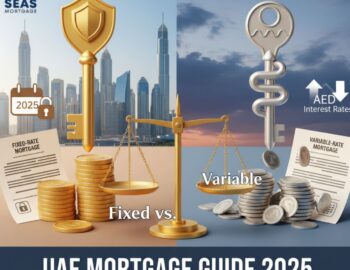
Fixed vs. Variable Mortgage UAE: Best Guide for Homebuyers 2025
Did you know over 60% of UAE homebuyers in 2025 are rethinking how rising interest rates impact their mortgage choices? Whether you’re a first-time buyer or a seasoned investor, the decision between a fixed vs. variable mortgage UAE can save — or cost — you thousands of dirhams. In this guide, you’ll learn the differences, benefits, risks, and expert tips to confidently choose the mortgage option that fits your goals. Fixed vs. Variable Mortgage UAE: What This Guide Covers Securing the right mortgage in the UAE isn’t just about finding the lowest rate. It’s about balancing financial stability with flexibility. With property prices holding strong in Dubai and Abu Dhabi, buyers today face one of the most important decisions: whether to lock in a fixed-rate mortgage or gamble on a variable-rate mortgage tied to EIBOR. Why does this matter in 2025? Global interest rates have been unpredictable, and UAE homebuyers are more cautious about repayment stability. Choosing the wrong mortgage type could mean higher monthly payments, unnecessary stress, or lost savings. In this article, you’ll discover: How fixed and variable mortgages work in the UAE. A side-by-side mortgage comparison. Real-world scenarios to decide which option suits your needs. Actionable tips for first-time buyers and investors. By the end, you’ll know exactly how to choose between fixed vs. variable mortgages with confidence. 📌 Fixed-Rate Mortgages in the UAE Point: A fixed mortgage locks your rate for a set period, usually 1–5 years. Evidence: In the UAE, banks typically offer fixed periods before reverting to variable terms, making it a safe short- to mid-term strategy. Practical Tip: Ideal for families who want repayment certainty and don’t want to worry about market swings. Pros: Stability, predictable payments, easier budgeting. Cons: Higher starting rates, penalties for early settlement, limited flexibility. 📌 Variable-Rate Mortgages in the UAE Point: A variable mortgage tracks EIBOR plus a bank’s margin, so payments rise or fall with the market. Evidence: With UAE rates tied to global benchmarks, variable mortgages fluctuate more. In 2024–2025, many borrowers experienced both lower costs and sudden increases. Practical Tip: Best for investors or short-term residents who can handle potential rate hikes. Pros: Lower initial cost, flexibility, benefits if rates fall. Cons: Uncertainty, higher risk, harder to plan long-term. 📊 Mortgage Comparison Table Feature Fixed-Rate Mortgage Variable-Rate Mortgage Stability Rate unchanged for 1–5 years Changes with EIBOR Monthly Budgeting Predictable Fluctuates Starting Cost Slightly higher Lower Best For Long-term planners Short-term investors Risk Level Low Moderate to high Which Mortgage Is Better in 2025? Scenario 1 – Long-term resident: Fixed rates provide peace of mind. Scenario 2 – Short-term investor: Variable loans may offer more flexibility and cost savings. Scenario 3 – Risk-averse buyer: Stick with fixed. Scenario 4 – Risk-tolerant buyer: Variable could save money if rates drop. 📊 2025 Quick Stats (Data Box) 57% of UAE homebuyers prefer fixed mortgages in 2025. Variable mortgages remain popular with investors, especially in Dubai Marina. The average fixed term in UAE banks is 3 years before switching to variable. Key Takeaways Fixed mortgages = stability, best for families and long-term buyers. Variable mortgages = flexibility, best for investors or short stays. UAE lenders often combine both, so always compare products. FAQ Section 1: What is the safest mortgage type in the UAE? A: A fixed-rate mortgage is considered safer since your monthly payments won’t change during the fixed period. 2: Can I switch from variable to fixed in the UAE? A: Yes, but check for fees. Many banks allow refinancing after the initial term. 3: What happens after my fixed term ends? A: Most UAE banks automatically shift your loan to a variable rate linked to EIBOR. 4: Which mortgage is cheaper in the UAE? A: Variable mortgages usually start cheaper, but fixed mortgages may save money if rates rise. Conclusion The choice between fixed vs. variable mortgage in the UAE ultimately comes down to your financial goals, risk appetite, and how long you plan to own the property. Fixed mortgages offer peace of mind, while variable loans provide flexibility and potential savings. As 2025 unfolds with shifting global rates, it’s wise to evaluate your options carefully, compare banks, and even consult a mortgage broker. By doing so, you’ll not only secure the best UAE home loan for today but also safeguard your financial stability for years ahead.

September 22, 2025
Mortgage in Dubai: Best Options for Buyers
Dubai has rapidly evolved into a global real estate hub, attracting investors and homebuyers from around the world. With its luxurious developments, tax-free income, and strategic location, purchasing property here has become increasingly appealing. However, one of the most important considerations for buyers is securing the right mortgage in Dubai. Navigating mortgage options can be complex, but with the right knowledge, buyers can find the most suitable and cost-effective solution. Understanding Mortgages in Dubai A mortgage in Dubai is a financial arrangement provided by banks or financial institutions that allows buyers to purchase a property while repaying the loan in installments. Mortgages in Dubai typically cover up to 75–80% of the property value for expatriates and up to 85% for UAE nationals, depending on eligibility, income, and property type. Interest rates are offered on either a fixed rate or a variable (floating) rate basis: Fixed Rate Mortgage: The interest rate remains constant for a set period, usually 1–5 years. This provides stability in monthly payments. Variable Rate Mortgage: The interest rate changes based on market conditions and the Emirates Interbank Offered Rate (EIBOR). While this can reduce payments in favorable conditions, it carries the risk of higher future payments. Eligibility Criteria for Mortgages in Dubai To qualify for a mortgage in Dubai, applicants must meet specific requirements: Age: Applicants must be at least 21 years old, with repayment ending before the age of 65 for expatriates and 70 for UAE nationals. Income: A minimum monthly income of AED 10,000 (for expatriates) is generally required, though this varies by bank. Employment: Salaried employees and self-employed individuals are eligible, but criteria differ. Self-employed buyers must show proof of business activity for at least two years. Credit Score: A good credit history with the Al Etihad Credit Bureau (AECB) is essential for approval. Best Mortgage Options for Buyers in Dubai 1. Conventional Bank Mortgages Banks such as Emirates NBD, Mashreq, and ADCB offer conventional mortgage products with competitive interest rates. These are ideal for buyers seeking stability and long-term repayment options. Key Features: Loan-to-value ratio (LTV): Up to 75% for expats, 80–85% for UAE nationals Tenure: Up to 25 years Fixed or variable interest rate options 2. Islamic Mortgages For those who prefer Sharia-compliant financing, Islamic banks such as Dubai Islamic Bank and Abu Dhabi Islamic Bank offer Islamic mortgages (Ijara and Murabaha). Key Features: No interest charged, instead profit rates are applied Structured as lease-to-own or cost-plus financing Flexible repayment terms up to 25 years 3. Expatriate Mortgages Dubai’s real estate market is highly popular with expatriates, who often require tailored mortgage solutions. Many banks provide special mortgage products for non-residents and expatriates with global income sources. Key Features: Available for both residents and non-residents Property must be in a designated freehold area Slightly higher down payment requirements for non-residents 4. Off-Plan Mortgages With Dubai’s booming property development sector, many buyers are interested in off-plan projects. Some banks provide mortgages that cover under-construction properties from approved developers. Key Features: Loan disbursed in stages, aligned with construction progress Lower upfront costs Suitable for investors seeking appreciation during the build period 5. Buy-to-Let Mortgages For investors looking to generate rental income, buy-to-let mortgages are a strong option. These mortgages are specifically designed for property investors. Key Features: Property rental income can be used to offset loan repayments LTV ratios may vary depending on property type Attractive for long-term income-focused investors Mortgage Process in Dubai Securing a mortgage in Dubai involves several steps: Pre-Approval: Buyers obtain mortgage pre-approval from a bank, confirming eligibility and maximum loan amount. Property Selection: Choose a property that meets the bank’s mortgage criteria. Formal Approval: Submit documents including income proof, bank statements, and property details for final approval. Valuation: The bank conducts a property valuation to assess market value. Final Offer & Disbursement: Once approved, the mortgage funds are disbursed, and the transfer process begins at the Dubai Land Department (DLD). Costs Involved in Getting a Mortgage When applying for a mortgage in Dubai, buyers should consider additional costs: Down Payment: Minimum 20–25% for expatriates and 15–20% for UAE nationals Mortgage Registration Fee: 0.25% of loan value, payable to the DLD Bank Processing Fee: 0.5–1% of the loan amount Valuation Fee: AED 2,500 – AED 3,500 Property Registration Fee: 4% of property price These costs should be factored into the buyer’s financial planning. Tips for Choosing the Best Mortgage in Dubai Compare Interest Rates: Analyze both fixed and variable rates before committing. Consider Loan Tenure: Longer tenures reduce monthly payments but increase total interest. Assess Affordability: Ensure that mortgage payments do not exceed 30–35% of monthly income. Check Prepayment Options: Some banks allow early settlement with minimal fees, offering greater flexibility. Seek Expert Advice: Mortgage brokers can help compare products across multiple banks and secure better deals. Future Outlook for Dubai Mortgages With Dubai’s property market forecast to continue growing, mortgage demand is expected to rise. Competitive rates, innovative mortgage products, and government initiatives supporting real estate investment make Dubai an attractive location for buyers in 2025 and beyond. Expats and investors alike will continue to benefit from flexible financing opportunities that align with their long-term goals. FAQs 1. Can expatriates get a mortgage in Dubai?Yes, expatriates can get mortgages in Dubai, typically covering up to 75–80% of the property value, depending on eligibility and bank policies. 2. What is the minimum down payment for a mortgage in Dubai?For expatriates, the minimum down payment is 20–25% of the property value, while UAE nationals may qualify with as little as 15–20%. 3. Are mortgages in Dubai Sharia-compliant?Yes, Islamic banks offer Sharia-compliant mortgage options such as Ijara and Murabaha, which are interest-free and based on profit rates. 4. How long is the typical mortgage tenure in Dubai?Most mortgages in Dubai are available for up to 25 years, with repayment terms varying based on the borrower’s profile and bank. 5. What extra fees should I expect when applying for a mortgage in Dubai?Additional costs include a mortgage registration fee (0.25% of the ...

A Complete Guide to Getting a Mortgage in the UAE as an Expat
The UAE has become one of the world’s most attractive destinations for property investment, drawing expatriates from every corner of the globe. With its dynamic economy, tax-free income, and world-class lifestyle, it’s no surprise that more expats are choosing to buy property in Dubai, Abu Dhabi, and other emirates instead of renting. But for many, the first big question is: Can expats actually get a mortgage in the UAE? The answer is yes. However, the process is different from many other countries, and understanding the rules is key to a smooth property purchase. This guide breaks down everything you need to know about getting a mortgage in the UAE as an expatriate.